 Contact Us
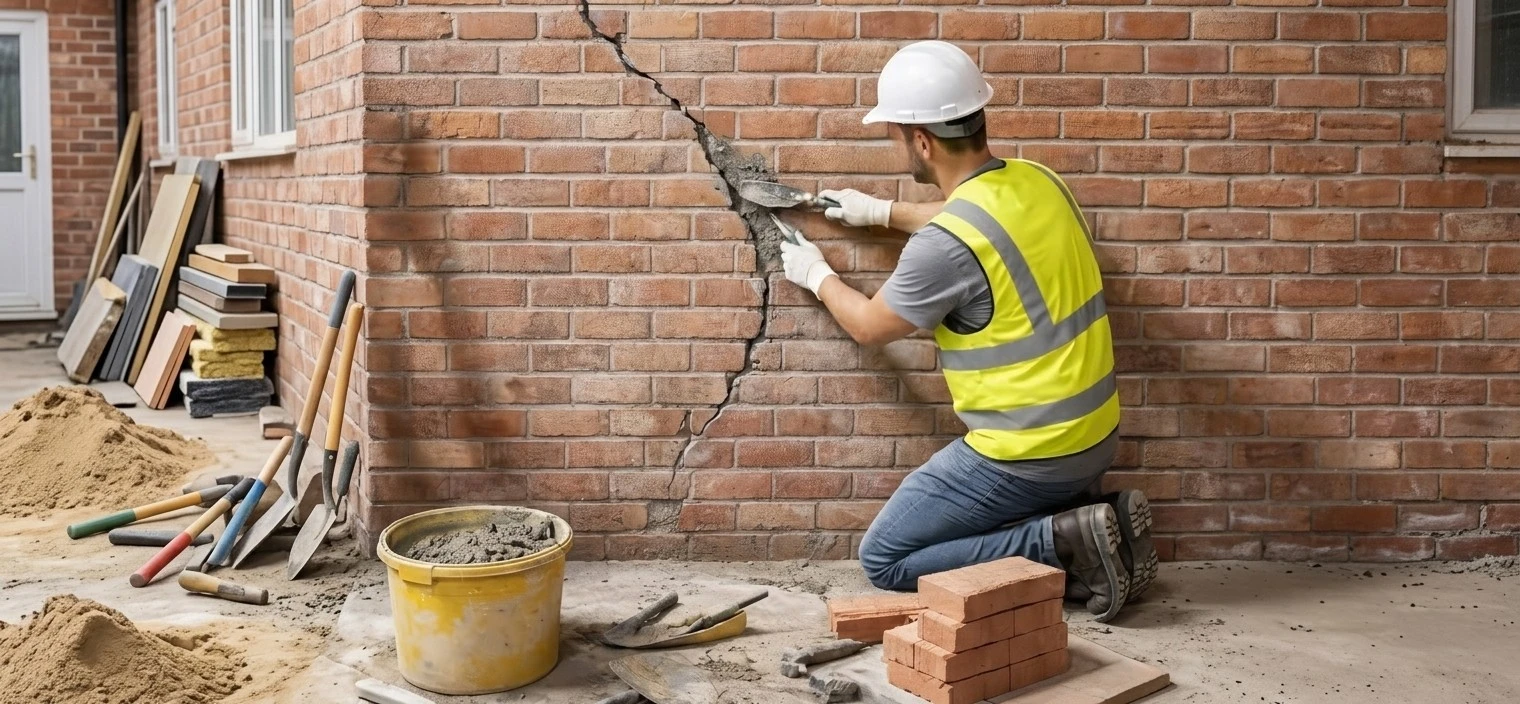
You spot a thin line on your bedroom wall. Is it nothing? Or is your house trying to warn you?
Cracks appear in brick walls due to constant movement of buildings. Factors like heat, water, soil, and weight continuously act upon any wall. The moment a wall doesn’t respond to that movement, a crack is formed in the wall. Bricks and mortar are quite hard when pressure is applied to them. They fail under tensile stress.
That’s why crack formation becomes very common in countries with hot climatic conditions such as Pakistan. Summer in Lahore usually exceeds 45°C. Monsoons come and make the walls wet. Groundwater (also known as kallar water) seeps from underground.
The vast majority of cracks are harmless; however, there are a few cracks that serve as signals of impending structural failure. Well, couldn’t we simply put some paint on a crack? A crack is not a sign; it’s an indication of what’s happening to the wall. You interpret the signs early, and repairs will cost nothing. You ignore the signs, and small repairs turn into big ones.
How a Brick Wall Carries and Transfers Load
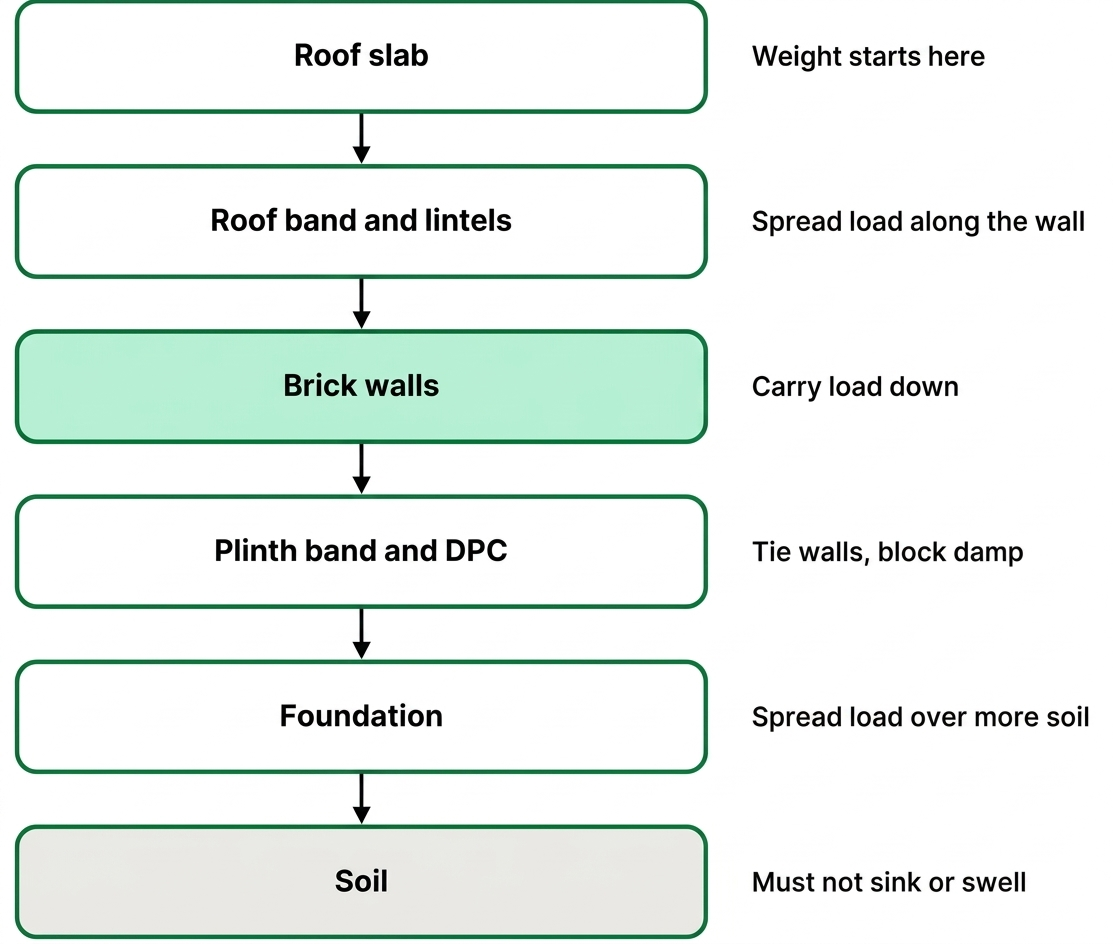
A brick wall is part of the load path. The roof presses against the wall. The wall exerts pressure on the foundation. And the foundation places pressure on the soil below. Such a sequence of events is called the load path.
Each member of this chain of events needs to fulfill its purpose. Any shift in any of the members affects the others above it. Take, for instance, a shifting foundation that drags down the entire wall. But since the wall cannot elongate, it gets cracked. Therefore, the significance of the crack in terms of location and pattern lies in such facts.
Plaster Cracks vs Brickwork Cracks
Most walls in Pakistan are brick covered with cement plaster. A crack can sit only in the plaster. Or it can go right through the bricks. The two need very different fixes.
Check | Plaster crack | Brickwork crack |
Depth | Only in the top 12 to 20 mm coat | Goes into the bricks or mortar joints |
Pattern | Random web or short lines | Straight, diagonal or stair-step lines |
Both sides of the wall | Usually one side only | Often shows on both sides |
Tap test | Plaster may sound hollow | Plaster is firm, crack runs deeper |
Usual cause | Shrinkage, poor curing | Movement, settlement, load |
Usual fix | Fill and repaint | Investigate, then stitch or repair |
Types of Brick Wall Cracks
Crack types have a specific form, location, and possible cause. Some of them are:
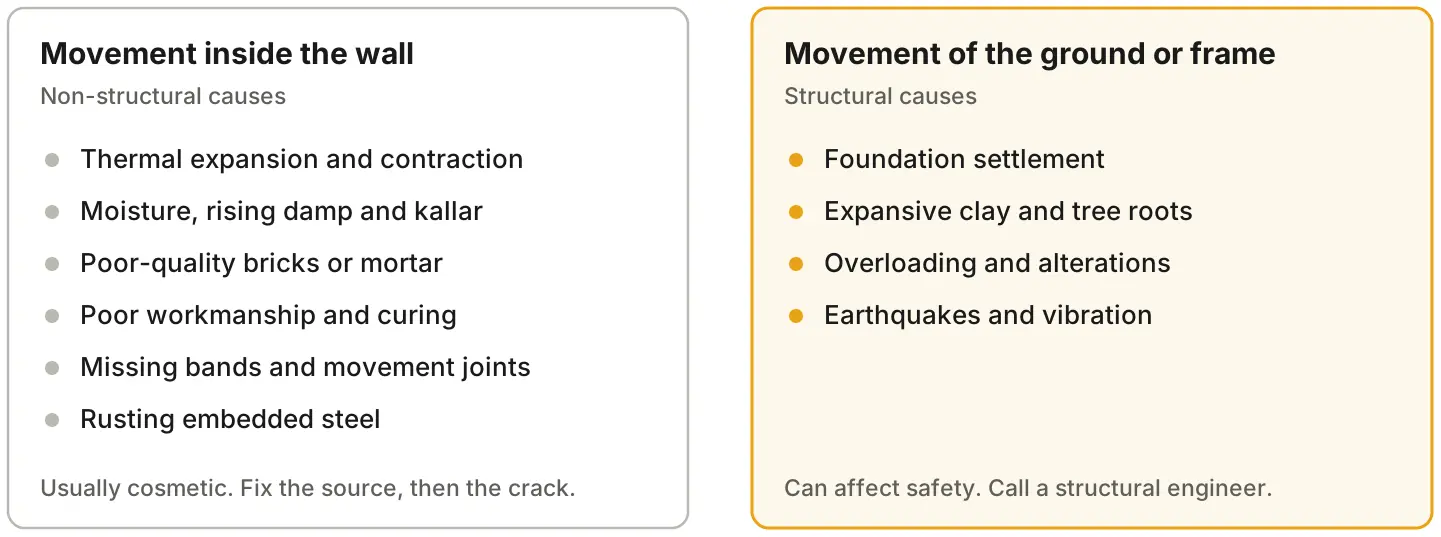
Structural vs Non-Structural Cracks
Any crack is divided into one of two categories:
Structural cracks are formed because of poor structural design, poor foundations, overload, and soil movement. They can influence the safety of buildings.
Non-structural cracks are formed because of the stresses in the material itself. The causes of most non-structural cracks are temperature, moisture, and shrinkage.
Hairline Cracks
Hairline cracks are thinner than 0.1 mm. It would be impossible to insert a sheet of paper inside them. Hairline cracks typically develop because of drying out and shrinking of the plaster or mortar.
Vertical and Horizontal Cracks
Vertical cracks run straight up and down. They often appear in long walls with no movement joint. Heat and moisture make the wall grow and shrink until it splits.
Horizontal cracks run sideways. Take these seriously. They can mean the wall is being pushed sideways, often by soil pressure, a heavy roof, or rusting steel. A horizontal crack near the roof can also come from a roof slab expanding in the sun.
Diagonal and Stair Step Cracks
Diagonal cracks are cracks that run diagonally on the wall. In brick masonry work, these cracks may run along the mortar joint in a staircase manner. This is called a stair step crack. Such cracks normally indicate that one part of the structure is settling faster than the other part.
Map or Crazing Cracks in Plaster
These are cracks that resemble a map or a dried-up riverbed. They appear as a network of cracks that only occur in the plaster. This is caused by poor plastering and not weakness in the structure. Causes include:
Using too much cement in the plaster mixture
Drying of the plaster too quickly under the sun
No curing using water after plastering
Over-troweling leading to exposure of cement paste
Cracking Around Doors and Windows
The openings are always the weak parts of the wall. Stress gets collected there, just like water collected around rocks in a stream. So these cracks appear in the corners of doors and windows.
Reasons for such cracks are the absence of or shortness of a lintel, a lintel that is too short on both sides, and movements in the foundation, etc. If the door or window is becoming jammed, then the crack can be structural.
Cracking Around Wall-Column and Wall-Slab Intersections
Many modern homes have concrete structures framed with brick walls inside them. Different properties of materials result in cracking along their joints. The straight crack appearing along the intersection is always non-structural. Such cracks are prevented by putting a wire mesh strip along the joints while plastering.
Common Causes of Brick Wall Cracks
The real question is: why did it crack? The BRE lists moisture movement and thermal movement as the most common causes. Ground movement is less common but more serious.
Foundation Settlement and Soil Movement
All new structures settle to some extent. However, the issue is uneven settlement. One corner settles more than the rest, leading to wall cracking. Poor quality backfill, inadequate compaction, and leaking pipes that erode soil are the most common causes.
Thermal Expansion and Contraction
Bricks expand when heated and contract when cooled. The roof slab exposed to direct sunlight is considerably warmer than the walls below it. As a result, the slab expands, pressing the top of the wall and forming a horizontal crack under it.
Moisture and Salt and Kallar Effects
The fired clay bricks slowly increase in size when absorbing moisture from the atmosphere. On the other hand, cement mortar and plaster shrink when drying. Cracks appear between the materials that experience opposite movements.
Rising damp is an additional factor leading to crack formation. The groundwater goes up through the wall and brings salts with it. In Pakistan, this type of salt is called kallar. When evaporated, salts form crystals inside the brick pores and separate the surface, leading to the flaking of plaster and crumbling of the brick near the floor level.
Poor-Quality Bricks or Mortar
Not all bricks are the same. A study of red bricks in the Lahore area showed large variations in their strength. Bricks fired insufficiently were weak and absorbed water.
Symptoms of poor-quality bricks:
Light yellow color in place of dark red
Thud in place of a ring sound when struck
Irregular shape and size
Presence of white salt deposits on its surface
Mortar is equally important. Excess sand reduces its strength. Excess cement makes it brittle and susceptible to shrinkage cracks.
Lack of Lintels, Bands, and Movement Joints
A lintel is the beam over doors and windows. A band is a strip of reinforced concrete along the circumference of the building. It holds the walls of the structure together like a belt.
Without them, each wall behaves independently. The openings sag, corners crack, and walls part at the joints. Movement joints are prearranged openings that allow expansion of a long wall.
Poor Workmanship
Many cracks result from poor workmanship. The most frequent causes are:
Bad bonding: Vertical joints line up in each course, so a crack can run straight through.
Hollow joints: Mortar does not fill the gaps fully.
Dry bricks: Unsoaked bricks suck water out of the mortar, so it never bonds.
No curing: Walls and plaster are not kept wet for 7 days, so they shrink and crack.
Overloads and Structural Modifications
The addition of another storey, water tank, or heavy roof increases the load on the walls not intended to bear such loads. A wall removal or large hole cut in the wall will interrupt the load path.
Expansive Clay Soils With Tree Roots
There are soils that expand when wetted and contract while drying out. This is made even worse by trees. In summer, a big tree extracts lots of water from the soil. Soil contracts, and so does the foundation.
Earthquake and Vibrations
The Pakistan area experiences earthquakes. Brickwork without any reinforcement performs poorly during an earthquake. An earthquake crack usually occurs in an X shape in areas between openings. Heavy traffic, pile driving, and blasting activities near the house may also create some cracking.
Corrosion of Reinforcement Steel
If the steel bars within the lintels, bands, and beams are exposed to moisture, then corrosion will occur. Corrosion occupies several times the volume of steel. It expands and forces concrete and brick to come apart, creating cracks along the steel bar line.
Warning Signs That a Crack Is Serious
Knowing the cause is important. These four indicators will help determine whether these cracks are dangerous or not.
Crack Width and Length: The crack width is the best indicator. The length of the crack also counts. It is more dangerous to have a short crack in one location than to have a long crack that spans from the floor to the ceiling or from one room to another.
Dormant and Active Cracks: A crack whose width doesn’t change is referred to as dormant, while an increasing crack is referred to as active. An active crack indicates that the problem is still happening.
Sticking Doors and Windows: The doors and windows form a good free indicator. If your door used to open and shut smoothly but now sticks, it is an indication that the door frame has changed shape due to movement in the walls.
Bulging, Leaning, and Sloping Walls: A normal wall should be straight. A wall that is bulging, leaning, or sloping is losing its strength. Sloping floors and cracking of the ceilings are also dangerous indicators.
If you see any of these with a crack, stop using the area and get an engineer to inspect it. Width alone is not the whole story. A 3 mm crack that is still growing can be more serious than a 6 mm crack that has been still for years.
How to Prevent Cracks in Brick Walls?
The cheapest crack is the one that doesn’t appear. In many cases, all the causes listed above can be avoided before laying even the first brick. Each solid construction begins with its foundation. Soil tests give your engineer information about the load-bearing capacity and swelling potential of the soil. It’s quite inexpensive in comparison with the cost of construction.
Mortar must be solid enough to support, but not more powerful than bricks. Thick mortar beds shrink and develop cracks more often. A long wall requires space for expansion. A movement joint is the joint intentionally left filled with a flexible sealant. It allows the wall to expand and contract without developing cracks.
Bonding means the connections from the brick row to the row. Proper bonding helps to distribute the load transversally.
People Also Search For: https://gharhub.com/bricks-vs-concrete-blocks-vs-aac-blocks
Below are some ways to avoid cracking of Brick walls:
Soil testing and appropriate design of foundation
Use of correct mortar and mortar joint thickness
Brick bonding pattern
Soaking Bricks and curing of walls
Plinth band, lintel band, roof band
Damp-proof course (DPC)
Movement joints
Drainage around the building
Choosing the Right Brick
Your choice of brick also affects how well the wall resists cracking. The figures below are typical ranges. Actual values vary a lot by kiln and factory, so always ask for test results.
Brick type | Compressive strength (MPa) | Water absorption | Crack resistance |
10 to 20 | Under 15 to 20% | Good when well fired | |
5 to 10 | About 20 to 22% | Fair | |
Fly ash brick | 7 to 12 | 10 to 15% | Good, uniform size |
Solid concrete block | 5 to 15 | 5 to 10% | Fair, shrinks while drying |
AAC block | 3 to 5 | High, but light | Good with thin-bed mortar and mesh |
Good bricks absorb less water and resist salt. A Lahore study found that well-fired bricks absorbed less water and were stronger than under-fired ones.
Brick Wall Crack Repair
Prevention is ideal, but many of us live in houses that already have cracks. The right repair depends on the crack's width and cause. Always fix the cause first. Filling a crack that is still moving is like putting a bandage on a wound that keeps bleeding.
Filling Hairline Cracks
Hairline and fine cracks are the easiest to repair.
Open the hairline crack to form a V-shaped groove with a scraper.
Dust off any remaining dust.
Spray with water.
Apply flexible acrylic filler or hairline crack sealant.
Allow it to dry, then apply primer and paint.
Always use flexible filler, but not cement, since it may crack again.
Repointing Damaged Mortar Joints
If the mortar joints between the bricks are cracked, repointing becomes necessary. Use a scraper to rake out an old joint up to about 15-20 mm. Apply water to the joint and refill it with new mortar having properties similar to the old one.
Costly Consequences Delay May Cause
Delay makes repairing the moving crack a major task because water penetrates the crack, steel rusts, and it continues to move. Early repair saves money on the job, a tiny sum in comparison to what you pay for delay.
Crack Stitching with Helical Bars
Crack stitching is a permanent repair for cracks in brickwork that have stopped moving. Thin stainless steel bars with a spiral shape are set into the mortar joints across the crack. The bars tie the two sides of the wall back together and spread the stress.
Epoxy and Polymer Injection
For deeper cracks in solid masonry or concrete, a resin is pumped into the crack under low pressure. Small ports are fixed along the crack every 200 to 300 mm. The surface is sealed, then resin is injected from the bottom port upward until it flows out of the next one. Epoxy bonds the crack and restores strength. Flexible polyurethane is better where some movement may continue.
Replacement of Deteriorated Bricks
Bricks that are damaged due to cracking or spalling must be replaced. Where the problem is caused by salt, you must remove moisture before replacing the brick; otherwise, the newly replaced brick will also not work.
Related: https://gharhub.com/where-to-buy-quality-bricks-in-pakistan
Re-Plastering with Wire Mesh or Fiber Mesh
For cracked plaster over a joint between brick and concrete, mesh is the answer. Remove the old plaster about 150 mm on each side of the crack. Fix galvanized chicken wire mesh or fiberglass mesh across the joint. Then plaster over it in two coats and cure well. The mesh spreads movement across a wider area, so the crack does not come back.
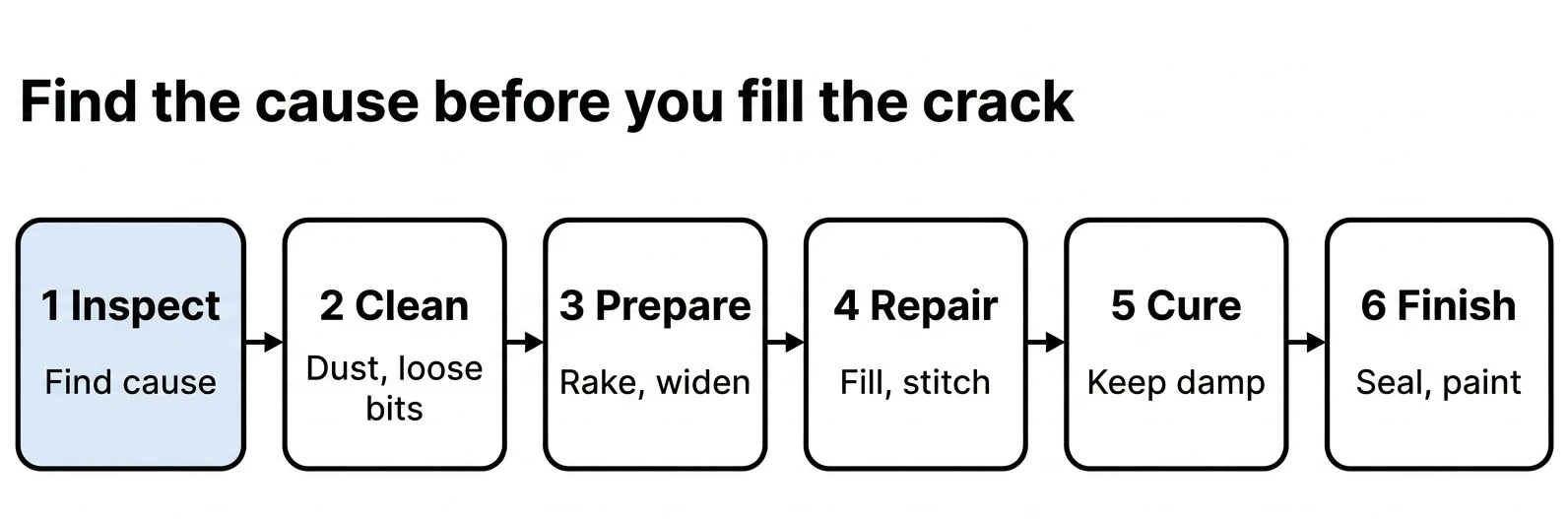
The General Repair Process
Regardless of the repair technique, there is a sequence that is common in every repair. For structural cracks, there is an additional step which should be completed before repairing, solving the cause of the problem. This could include underpinning, changing drainage, and even removing a tree.
Conclusion
The brick wall will crack due to building movements. Sometimes it will be a sign of distress in the foundation or structure. Hairline, map, and joint cracks are cosmetic, while wide diagonal, stair-step, and horizontal cracks will warrant closer inspection. Most of the cracking will arise from thermal or moisture actions. Settlement, expansive clay soils, overloading, or an earthquake will cause the more serious ones.
Methods to prevent such cracking include soil tests, good bricks, correct mortar, tie bands, a DPC, movement joints, curing, and proper drainage. Fill hairline cracks, point joints, and stitch or inject wider ones. Underpin when there is foundation settlement.
Cracks wider than a coin, continuing to widen, causing sticking doors, or any other warning signs require you to seek the professional advice of a qualified structural engineer. An affordable consultation today may avoid the expensive cost of repairs in the future.
Frequently Asked Questions (FAQs)
Is it normal to have cracks in a freshly constructed wall?
Yes, it is normal to have cracks, especially small ones. This is because the fresh mortar and plaster contract as they dry up, while the structure sinks into the ground after construction. Diagonal cracks that are wide or growing within a newly constructed building are abnormal.
Which wall cracks are considered dangerous?
A wall crack can be dangerous if it is wider than 5mm, continues to grow, runs diagonally or horizontally through the brickwork, or is visible on both sides of the wall. If the door sticks, the floor slants, and walls bulge, the situation gets even worse.
How to differentiate between a plaster crack and a brick crack?
Remove some of the plaster in the crack. If the brick behind the plaster remains intact, then there is only a plaster crack. If the crack runs into the brick or the mortar joint, then there is a crack in the wall.
Why do cracks occur at the corners of windows and door openings?
The stress concentrates at the corners of openings. In the absence of, or in case of insufficient length of the lintel, and inadequate bearing on the wall, the corner is the most vulnerable spot for cracking.
Can I patch the wall cracks myself using putty or cement?
Hairline cracks can be patched by yourself using acrylic flexible filler or putty. Do not use cement since it is brittle and may crack again. Do not patch wide and active cracks yourself.
How will I be able to tell that a crack is growing?
Draw a pencil line on both sides of the crack and note the date. Inspect the crack every 2 to 4 weeks. If the crack is past the marks or has opened up further, it is still developing. Also, you can attach a piece of tape or a plastic crack monitor across the crack. If it breaks or moves, the wall is moving.
Does cracking get worse in the summer or monsoon months?
During summer months, heat will cause expansion in roof slabs and drying of clay soil, leading to cracks. During the monsoon, wet soil swells, and water finds its way into cracks, widening them and causing dampness.