 Contact Us
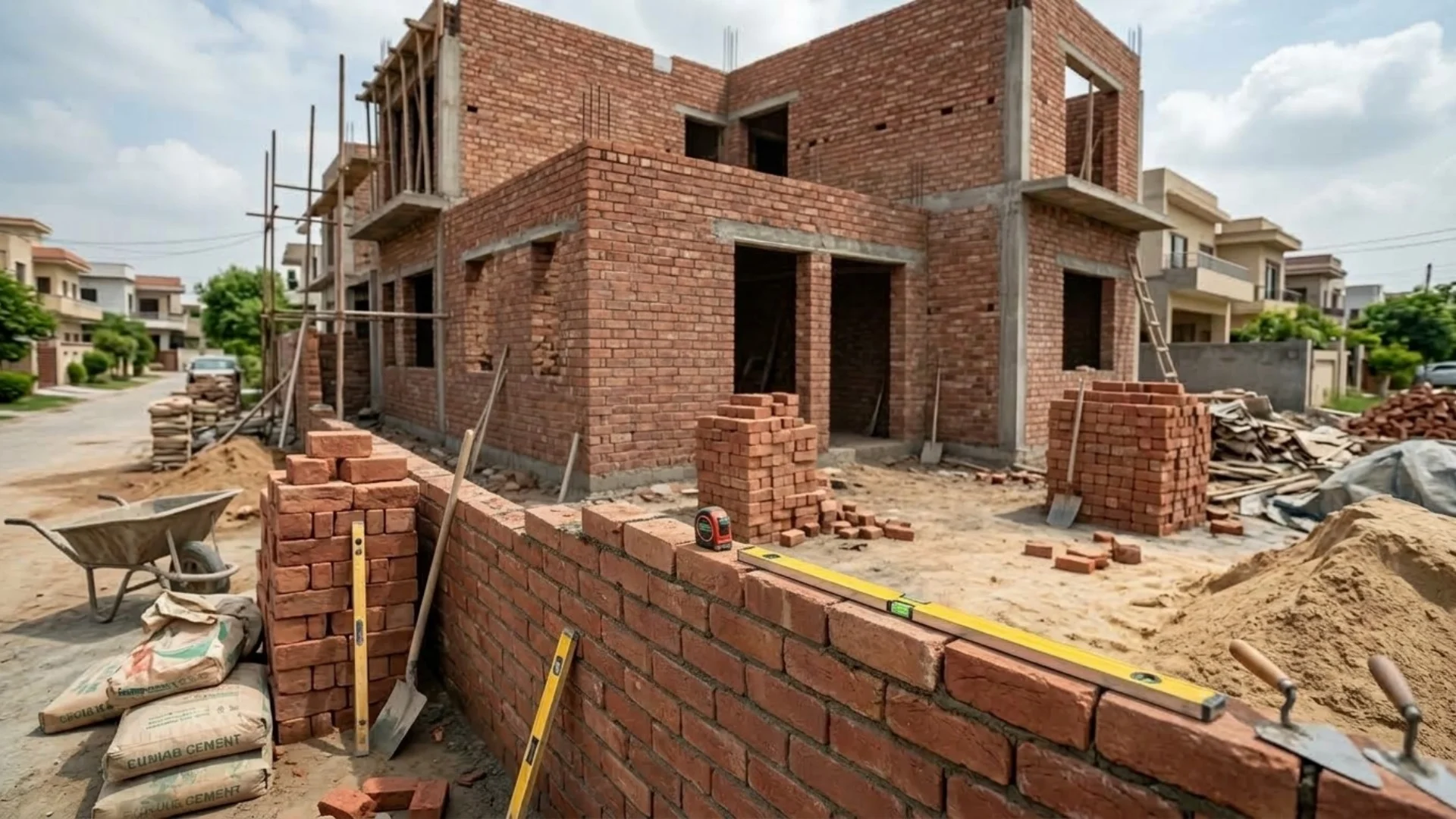
Pakistan builds with bricks on a huge scale. The country has over 20,000 brick kilns that turn out about 45 billion bricks a year. With that much supply, you would think finding bricks is easy. The real trouble is finding the right amount at the right price. A small counting mistake on a house can leave you short by thousands of bricks.
Picture this. You order 10,000 bricks for your new home. The mistris finish the ground floor walls. Then the bricks run out. You call the kiln again. The rate has gone up, and the new batch is a different color and size. This is a very common story. It is also easy to avoid.
Brick calculation for house construction means finding out how many bricks, how much cement, and how much sand your walls need. Once you know that, you can work out your brickwork cost per square foot. This guide shows you how, step by step, with simple math.
Types of Bricks Used in Pakistan
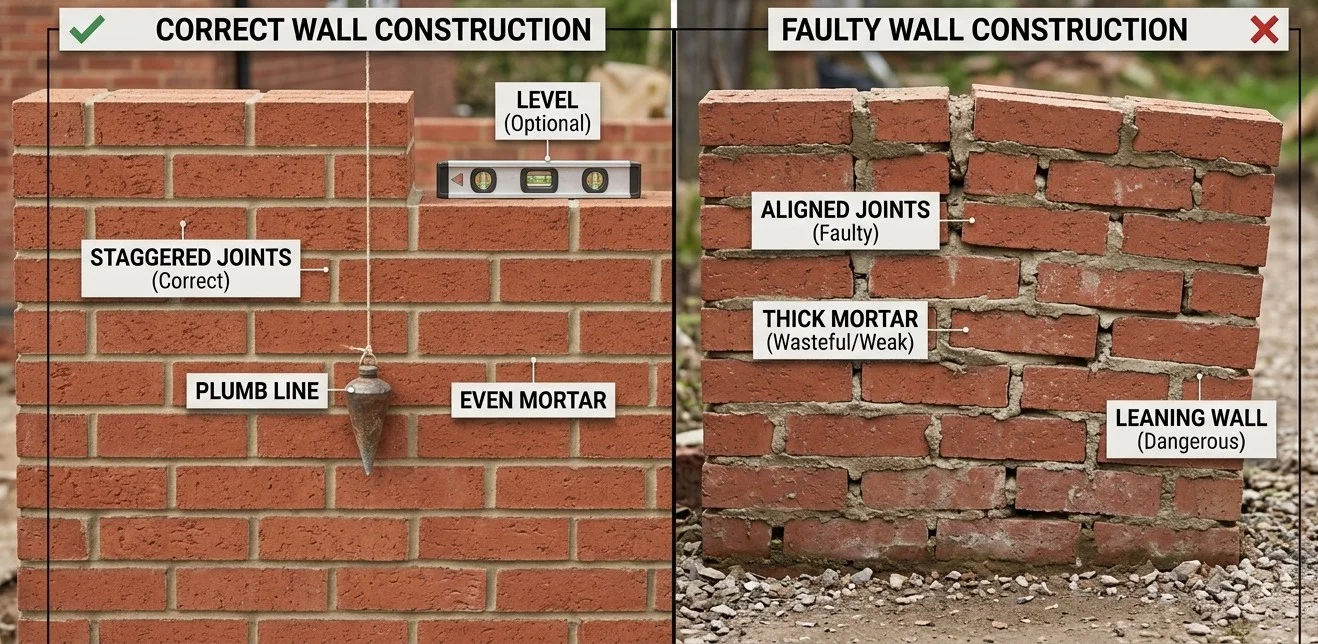
Most bricks in your area come from old-style kilns. About 80% of Pakistan's bricks are made in fixed-chimney bull's trench kilns. These kilns fire bricks unevenly, so quality can differ from one batch to the next. That is why testing a few bricks before you buy is so important. Most of them traditionally make clay bricks. The brick you pick changes both your wall strength and your final bill.
First class (Grade A) clay bricks
First class bricks are well burnt and evenly shaped. They have a deep red color and sharp edges. Good bricks also absorb little water, usually under 20 percent of their weight.
They are also strong. Their surface is smooth and free from cracks. Because they hold up well against rain and moisture, they last longer and need fewer repairs.
Use them for:
Outer walls
Load-bearing walls
Boundary walls exposed to rain.
Walls that will stay unplastered
Second Class and Third Class Bricks
Second class bricks are slightly uneven and may have small cracks or color changes. They are a bit lighter in color and may have a duller sound when struck. They cost less. They work for inner partition walls and plastered walls that carry little load.
The plaster covers their rough surface and gives them some protection. Keep them away from wet areas and the ground level of a building. They take in more water than first-class bricks, and this can lead to dampness over time.
Third-class bricks are under-burnt or over-burnt. Under-burnt ones are pale, soft, and crumble easily. Overburnt ones are twisted, brittle, and uneven in shape. Both types are weak and soak up lots of water. Avoid them for any wall that matters.
Fly Ash and Concrete Blocks
Fly ash bricks and concrete blocks are growing in use across Pakistan. Fly ash bricks are made from fly ash, cement, and sand. Fly ash is a fine powder left over from burning coal. Using it puts an industrial waste product to good use. It also means these bricks do not need to be fired in a traditional kiln, which helps cut smoke and fuel use.
Concrete blocks are much larger than a standard brick. One block covers the space of several bricks, so walls go up faster. Hollow blocks are also lighter, which reduces the load on your structure. The air gaps inside can improve heat and sound insulation, which keeps rooms more comfortable.
Both materials are more uniform in size than clay bricks. Straight edges and equal shapes mean masons need thinner mortar joints. Walls also come out flatter, so they need less plaster. That saves cement and sand, and it can lower your labor time too.
Material | Strength | Speed of work | Best use |
First class clay brick | High | Medium | Outer and load-bearing walls |
Second class clay brick | Medium | Medium | Partition walls |
Fly ash brick | Medium to high | Medium | General walls |
Concrete block | High | Fast | Boundary and large walls |
Standard Brick Sizes and Wall Thickness in Pakistan
Most standard bricks in Pakistan measure about 9 inches long, 4.5 inches wide, and 3 inches high. With a half-inch mortar joint, each brick takes up roughly 9.5 by 5 by 3.5 inches in the wall.
Brick sizes can vary a little from kiln to kiln. Always measure a few bricks from your supplier before you finalize your count. The wall thickness decides how many bricks you need.
4.5-inch wall: One brick thick. Used for inner partitions.
9-inch wall: Two bricks thick. Used for outer walls and walls that carry the roof load.
A 9-inch wall uses about double the bricks of a 4.5-inch wall for the same area. It is stronger and gives better heat and sound protection. A 4.5-inch wall costs less but should not carry heavy loads.
How to Calculate the Number of Bricks Required
To find the number of bricks, multiply the net wall area by the bricks needed per square foot. Then add 5 to 10 percent for wastage.
Step 1: Measure wall length and height
Measure the length of every wall in feet. Then measure the height. Most house walls are 10 to 12 feet high. Multiply length by height to get the gross wall area. Here are the bricks needed per square foot of wall, based on the standard size above.
Wall type | Bricks per sq ft (approx.) |
4.5-inch wall | 4.3 |
9-inch wall | 8.7 |
Step 2: Deduct doors, windows, and openings
Openings do not need bricks. Multiply the width by the height of each door and window. Add them up and subtract from the gross area. A standard door is about 3 by 7 feet, which is 21 sq ft. A typical window is about 4 by 4 feet, which is 16 sq ft.
Step 3: Calculate wall volume or area
Net Wall Area = Gross Wall Area - Openings
Most contractors in Pakistan work by area, so square feet is enough. If you want volume, multiply the area by the wall thickness in feet. A 9-inch wall is 0.75 feet thick.
Step 4: Apply the bricks per square foot formula
Multiply the net area by 4.3 for a 4.5-inch wall, or by 8.7 for a 9-inch wall. Do the calculation separately for each wall type. Then add the two results.
Formula: Total Bricks = Net Wall Area (sq ft) × Bricks per Sq Ft × (1 + Wastage)
Step 5: Add wastage allowance
Bricks break during unloading, carrying, and cutting. Add 5 percent if your supplier is reliable and your site is well managed. Add up to 10 percent for rough roads or lower-grade bricks.
Worked example for a typical house plan
Say you have a 9-inch wall that is 40 feet long and 10 feet high.
Gross area: 40 × 10 = 400 sq ft
Openings: 1 door (21 sq ft) plus 2 windows (32 sq ft) = 53 sq ft
Net area: 400 − 53 = 347 sq ft
Bricks before wastage: 347 × 8.7 = about 3,019
Add 7 percent wastage: 3,019 × 1.07 = about 3,230 bricks.
You need about 3,230 bricks for this wall.
Brick Estimation for 5 Marla, 10 Marla, and 1 Kanal Houses
One marla is 272.25 sq ft. One kanal is 20 marla. So:
Plot size | Plot area (sq ft) | Rough bricks for one floor (excluding boundary wall) |
5 marla | 1,361 | About 14,000 to 18,000 |
10 marla | 2,722 | About 28,000 to 36,000 |
1 kanal | 5,445 | About 55,000 to 70,000 |
These ranges assume that about 80 to 85 percent of the plot is covered. A design with many rooms and extra internal walls will need more. Boundary walls, extra floors, and boundary gates are not included.
Mortar and Plaster Requirements for Brickwork
Bricks are only part of the story. Mortar holds them together. Plaster protects the finished wall. Both need cement and sand. Cement-to-sand ratios for brick masonry tell you how much sand to mix with each part of cement.
1:4 mix (one part cement, four parts sand): Stronger. Good for 9-inch outer and load-bearing walls.
1:6 mix: Common for partition walls and general work.
A richer mix costs more but gives stronger joints. Mortar fills the gaps between bricks. In a 9-inch wall, it makes up roughly one-fifth to one-quarter of the wall volume. Dry materials shrink when mixed with water, so builders add about one-third extra to the dry volume. Plaster is usually applied about half an inch thick. The plaster should be applied on both sides of a wall if those sides are finished.
For every 100 sq ft of 9-inch brick wall with a 1:4 mix:
4 bags of cement (50 kg each)
19 cubic feet of sand
For a 4.5-inch wall:
2 bags of cement
9 to 10 cubic feet of sand
For every 100 sq ft of wall with a 1:6 mix, plaster will use:
1 bag of cement
5 cubic feet of sand
How to Estimate Brickwork Cost Per Square Foot
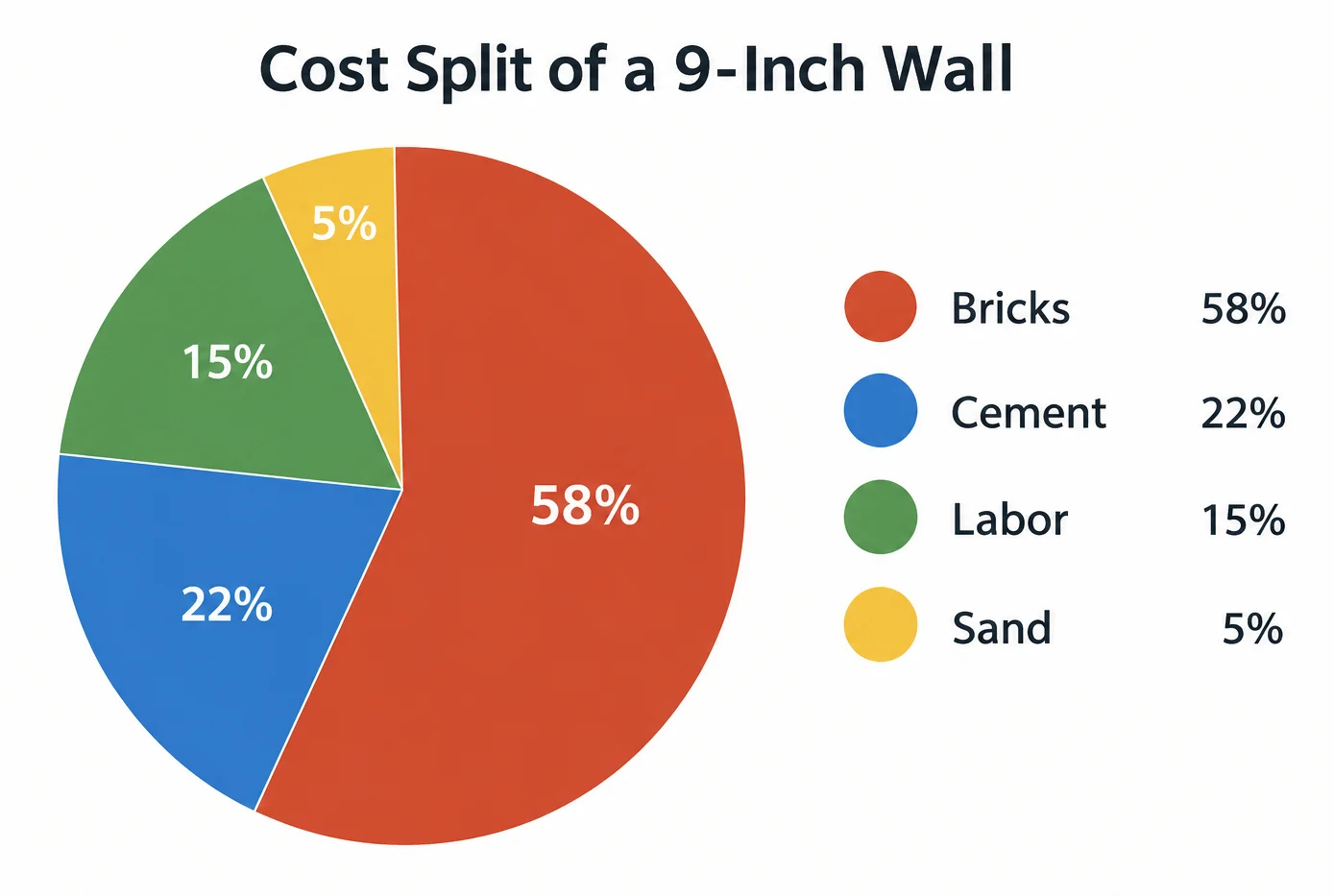
Brickwork cost per square foot equals the cost of bricks, cement, sand, and labor needed to build one square foot of wall. Smaller costs include water, scaffolding, transport, and curing. There are four main costs:
Bricks, including wastage
Cement for mortar
Sand for mortar
Labor for the mistri and mazdoor
In Pakistan, labor is usually paid in one of two ways. You buy all materials. The contractor charges for work only. Rates are often quoted per 1,000 bricks or per 100 sq ft. Or the contractor supplies everything for one price. It is easier but harder to check. Ask for rates in writing. Compare at least three quotes.
Related: https://gharhub.com/brick-prices-in-pakistan-gharhub
Material cost per square foot formula
Material Cost per Sq Ft = (Bricks × Brick Rate) + (Cement × Bag Rate) + (Sand × Sand Rate)
Most budget problems start with small errors. Here are the usual ones:
Counting every wall as a 9-inch wall
Forgetting to subtract doors and windows
Ignoring broken bricks and wastage
Skipping mortar and plaster costs
Using old rates from last year
Factors That Affect Brickwork Cost in Pakistan
Brick supply depends on a very large and informal industry. The brick sector is responsible for about 1.5% of Pakistan's GDP. It is also largely unregulated and uncoordinated. That means output and prices can swing quickly when rain, smog rules, or fuel costs disrupt the kilns.
Plan your purchase early and lock in your rate in writing. Some of the factors that affect brickwork cost in Pakistan are:
City-wise Price Variations
Brick rates change by city. Cities close to kilns pay less. Cities far from them pay more because of transport. Sand and cement prices also differ by region. About 90 percent of the kilns are in Punjab and Sindh. Cities near these kiln clusters often pay less for transport. Peshawar shows how local supply works. The city has roughly 450 brick kilns, and together they make about 3.4 million bricks every day.
Seasonal Demand and Kiln Supply
Kilns often slow down or close in the rainy season. Smog rules and winter restrictions can also cut output. Less supply means higher rates. Building demand is high in dry months, which can push prices up too.
Transportation and Loading Charges
Bricks are heavy. Distance, road quality, and truck size change your cost. Unloading and stacking add more. Ask whether the quoted price includes delivery.
Brick Quality and Grade
A first-class brick costs more upfront. It saves money later because fewer break and the wall lasts longer. A cheap brick that cracks leads to repair costs.
Labor Availability and Skill Level
Skilled mistris charge more. They also waste less and build straighter walls. In busy seasons, good labor is hard to find, and rates rise.
Ways to Reduce Brickwork Costs Without Compromising Quality
Some of the ways to reduce brickwork costs without compromising quality are :
Bulk buying and supplier negotiation: Order the full quantity from one supplier. Ask for a bulk discount. Lock in the rate in writing and agree on a delivery schedule.
Reducing wastage on site:
Stack bricks on flat ground, away from heavy traffic
Ask the driver to unload carefully.
Use half bricks for corners and gaps instead of cutting new ones.
Keep mortar mixes small so none dries and goes to waste
Using alternative blocks where suitable: Hollow blocks or fly ash bricks can work for inner partitions. They are lighter and quicker to lay.
Smart design and wall planning: Fewer internal walls mean fewer bricks. Use 4.5-inch walls where load is low.
Common Brickwork Mistakes to Avoid
These are the common brickwork mistakes to avoid that homeowners do :
Poor quality or underfired bricks
Incorrect mortar mix
Skipping curing
Ignoring wastage and breakage
People Also Search For: https://gharhub.com/where-to-buy-quality-bricks-in-pakistan.
Conclusion: Plan Smart, Build Efficiently
Good brick calculation starts with one simple idea. Take your net wall area and multiply it by the bricks needed per square foot. A 4.5-inch wall needs about 4.3 bricks per sq ft, and a 9-inch wall needs about 8.7. Then add 5 to 10 percent for wastage, because some bricks always break on site. This gives you a base count you can trust and helps you avoid running short halfway through construction.
Bricks are only one part of your budget. Cement, sand, and labor matter just as much, so include them from the start. Brickwork cost per square foot changes with wall thickness, brick grade, city, and season. The rates in this guide are samples, so always verify them with local quotes before you finalize your budget. Share your house plan with a qualified contractor or civil engineer for a final check.
Frequently Asked Questions (FAQs)
How many bricks are needed per square foot of wall?
A 4.5-inch wall needs about 4.3 bricks per square foot. A 9-inch wall needs about 8.7 bricks per square foot. Add 5 to 10 percent for wastage.
How many bricks are required for a 5 Marla house?
A single-floor 5 Marla house usually needs about 14,000 to 18,000 bricks for the main walls. Boundary walls and extra floors add to this.
What is the average brickwork labor cost per square foot?
It depends on city, season, and contractor. Many contractors quote per 1,000 bricks laid. Convert that to square feet by multiplying by the bricks per sq ft. Always get at least three local quotes.
Which brick grade is best for house construction?
First-class (Grade A) bricks are best for outer and load-bearing walls. Second-class bricks can work for inner partitions. Avoid third-class bricks.
How many bricks are needed for a 1,000 sq ft house?
For a single-floor house with a covered area of near 1,000 sq ft, expect roughly 12,000 to 16,000 bricks. This depends on wall thickness, wall height, and number of rooms.
How much cement is needed for 1,000 bricks?
For 9-inch walls with a 1:4 mortar mix, expect roughly 4 to 5 bags of cement per 1,000 bricks. Sand needs are roughly 20 to 22 cubic feet. Your mix ratio and joint thickness can change this.
Is a 4.5-inch wall strong enough for outer walls?
No. A 4.5-inch wall suits partitions. Outer and load-bearing walls are normally built 9 inches thick. Ask your structural engineer for your design.
Do fly ash bricks cost less than clay bricks?
It depends on your city and supplier. Fly ash bricks can save on mortar and plaster because they are uniform in size.