 Contact Us
Suppose you work in either Lahore or Karachi. You pay rent for your apartment on the first day of each month. Year after year, the rent from the landlord goes up. You struggle, but the cost of buying a home rises much quicker. Ownership seems more distant all the time.
This situation is shared by millions of Pakistani households right now. The statistics reveal the reasons behind the scenario. The 2023 census conducted in Pakistan showed that there are 241.49 million people in the country. This number is increasing at a rate of 2.55% per year. The population can potentially double within just two decades.
People also searched for: https://gharhub.com/house-vs-apartment-better-investment-lahore
Urbanization in Pakistan: A Quick Overview
Urbanization refers to an increased population residing in urban areas rather than rural ones. Urbanization occurs due to migration from rural areas to cities for employment opportunities, an increase in population within the urban centers, and annexation of the villages surrounding cities into these urban centers. Urbanization in Pakistan is the fastest in South Asia.
Currently, almost four of every ten Pakistanis reside in a city. This figure continues to grow with each census. This population growth is contributing to this rapid pace. The outcome has been a shortage of housing that affects not only tenants but first-time home buyers and poor households. Currently, Pakistan faces a shortage of over 10 million houses.
How Pakistan's Urban Population Has Grown (1998 vs 2017 vs 2023)
Pakistan's cities have more than doubled in size in 25 years. Here is how the numbers changed across the last three censuses.
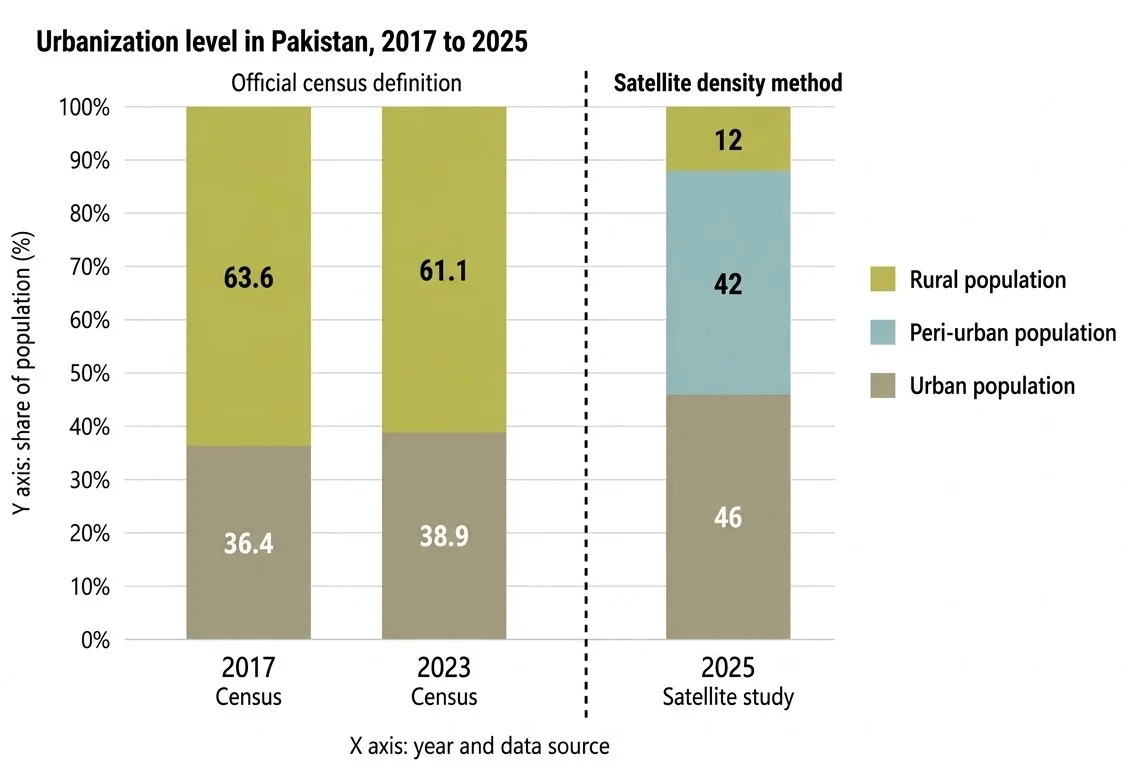
Census year | Share living in cities | People living in cities |
1998 | 32.5% | About 43 million |
2017 | 36.44% | 75.67 million |
38.88% | 93.88 million |
City populations are also growing almost twice as fast as villages. Between 2017 and 2023, urban areas grew by 3.67% a year, while rural areas grew by 1.88%. The real number may be even higher. One study found that the 2017 census may have undercounted urbanization by as much as 22%. It estimated that close to 44.5% of Pakistanis already lived in urban areas.
Which Cities Are Growing the Fastest? (Karachi, Lahore, Faisalabad, Rawalpindi/Islamabad, Peshawar)
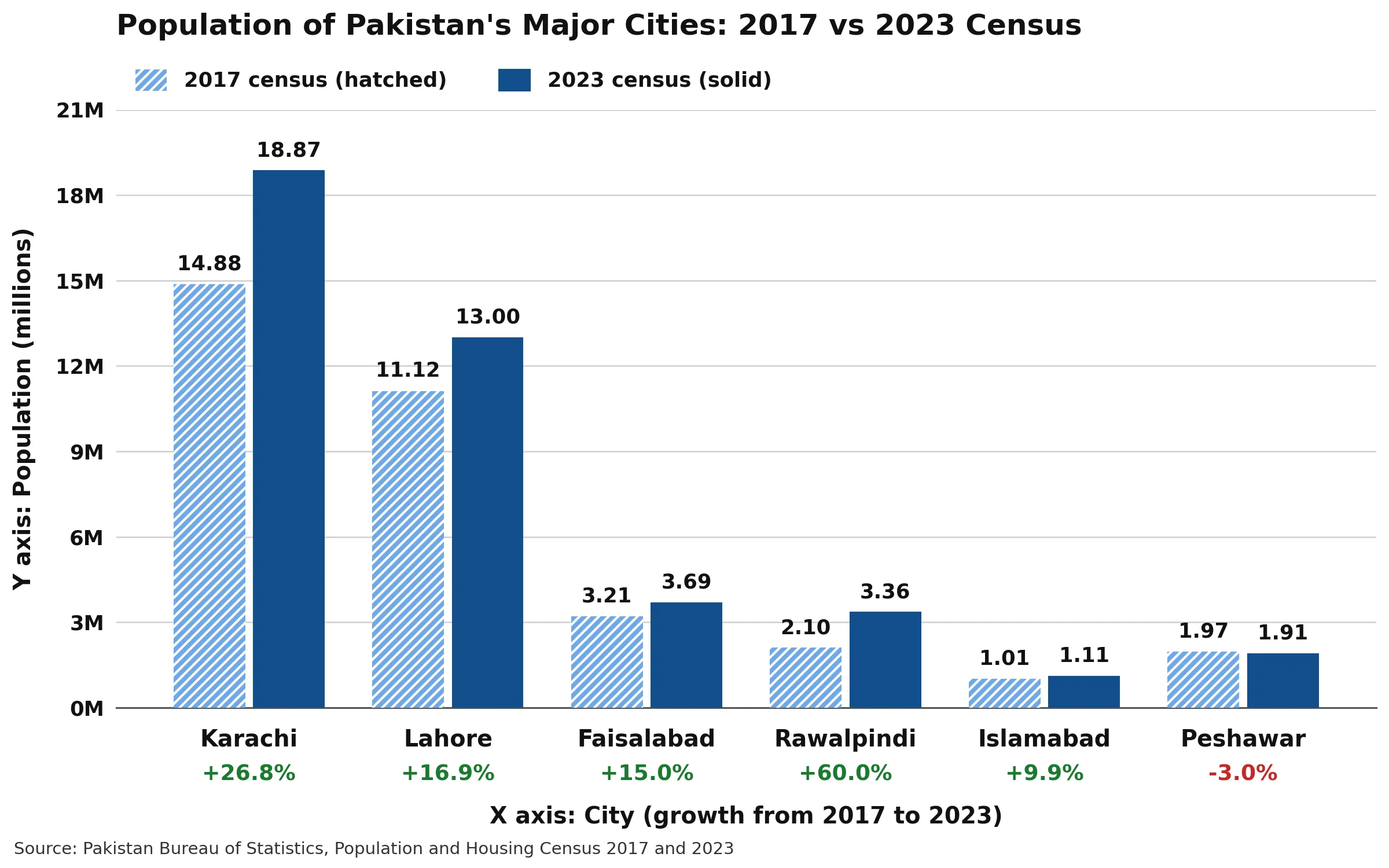
Pakistan now has 10 cities with more than one million people. Together, they hold 54% of the country's urban population. Here is how the biggest ones changed.
City | 2017 population | 2023 population | What changed |
Karachi | 14.88 million | 18.87 million | Grew about 4.05% a year, the fastest among big cities |
Lahore | 11.12 million | 13.0 million | Grew about 2.65% a year |
Faisalabad | 3.21 million | 3.69 million | Steady industrial growth |
Rawalpindi | 2.10 million | 3.36 million | Biggest jump on paper |
Islamabad | 1.01 million | 1.11 million | Slower, steadier growth |
Peshawar | 1.97 million | 1.91 million | Declined slightly |
How Population Growth Is Causing Urbanization in Pakistan
Now that we know how big our cities have become, the next question is simple. Why are they growing so fast? Four main forces are at work. Population growth sits at the heart of all of them.
High Natural Population Growth
Pakistan's population grows by 2.55% every year. That is one of the highest rates in the region. Between 2017 and 2023 alone, the country added about 35 million people. That is almost two more cities the size of Karachi.
Many people think migration is the main reason cities grow. But research shows that high birth rates inside cities are the biggest driver of urban growth in Pakistan. Migration comes second.
Rural-to-Urban Migration for Jobs, Education, and Healthcare
Villages offer fewer chances to earn a good living. Cities offer more. Pakistan's cities produce about 55% of the country's GDP. That is why families pack their bags and move.
The most common reasons people move to cities are:
Jobs: Factories, offices, shops, and construction sites are mostly in cities.
Education: Good schools, colleges, and universities are concentrated in big cities.
Healthcare: Big hospitals and specialist doctors are rarely found in villages.
Better facilities: Cities usually have better electricity, gas, internet, and transport.
Falling farm income: Small farmers earn less as land gets divided between family members.
Expanding City Boundaries and Peri-Urban Sprawl
Cities are not just filling up. They are also spreading out. Villages on the edge of Lahore, Karachi, and Rawalpindi are slowly turning into suburbs. New housing societies replace fields. These in-between areas are called peri-urban areas.
This growth often happens without a plan. Many such areas are not even counted as urban in official data. So they miss out on proper roads, sewerage, and water lines. Sprawl adds more homes, but not always the right homes in the right places.
Climate Change and Flood Displacement
Climate change is now pushing people out of villages too. Droughts, heat waves, and floods are eroding rural livelihoods.
The 2022 floods are a clear example. They displaced nearly 8 million people. At least 50,000 people moved to Karachi, and some planned to stay for good. Every family that settles in a city needs a place to live.
How Rapid Urbanization Is Creating Pakistan's Housing Crisis
More people in cities means more people need homes. That part is simple. The problem is that homes are not being built fast enough, or cheaply enough.
Here is how population growth turns into a housing crisis, step by step.
The Widening Housing Demand-Supply Gap
The shortage is already huge, and it grows every single year.
Housing indicator | Figure |
Total housing shortage | |
New urban homes needed each year | |
New urban homes actually supplied each year | About 150,000 units |
Share of unmet demand from low-income groups |
In simple words, for every 7 families that need a new home in a city, only 3 get one. The other 4 rent, crowd into a relative's house, or move into an informal settlement.
Rising Land and Property Prices
When many buyers chase too few homes, prices go up. Between 2011 and 2021, land prices in Pakistan rose by 195.3%. In plain terms, a plot that cost Rs 10 lakh in 2011 cost close to Rs 30 lakh ten years later.
Most salaries did not triple in that time. So a home that a middle-class family could afford in 2011 is now out of reach for the same family.
Related: https://gharhub.com/petrol-price-construction-material-cost-pakistan
Soaring Rents and Shrinking Affordability
Families who cannot buy have to rent. And rents are climbing too. Here is what the data shows:
Rents in key Pakistani cities are rising by about 10% every year.
Nearly 1 in 4 urban households now live on rent.
The federal government raised its rental ceiling for its own employees by 85% from November 2025, citing the heavy burden of surging rents.
In Islamabad alone, about 43,000 government employees are waiting for roughly 17,400 official homes.
When rent eats a bigger part of the monthly salary, saving for a down payment becomes harder. This traps many families in renting for life.
The Growth of Katchi Abadis and Informal Settlements
When formal housing is too expensive, people build their own. These unplanned neighborhoods are called katchi abadis.
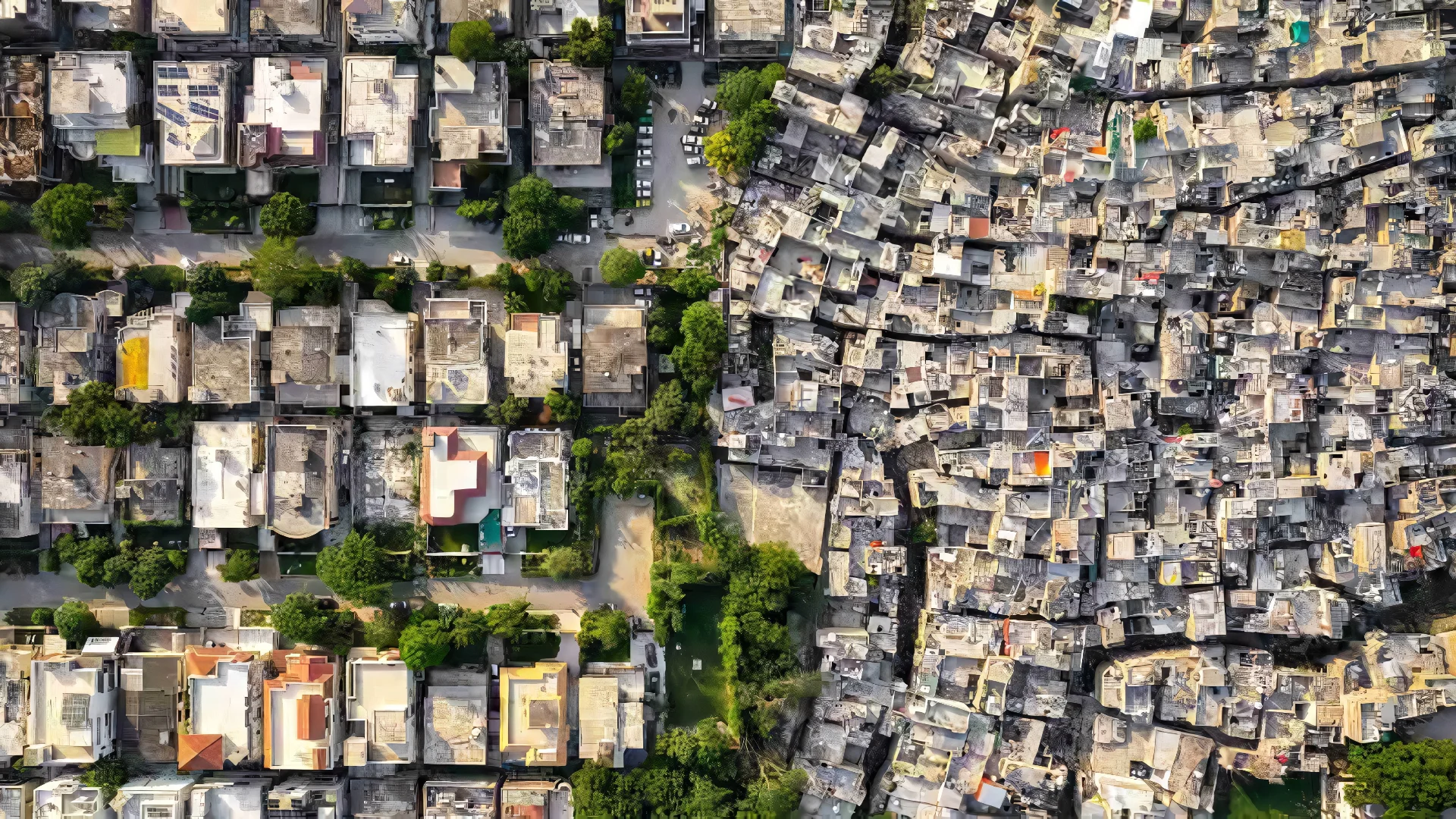
They often lack clean water, proper sewerage, and legal ownership papers. Karachi shows the scale of the problem. Around 62% of Karachi's population lives in informal settlements, across more than 580 officially recognised katchi abadis and many unlisted ones. Without land titles, families also live with the fear of being evicted.
Horizontal Sprawl vs Vertical Living
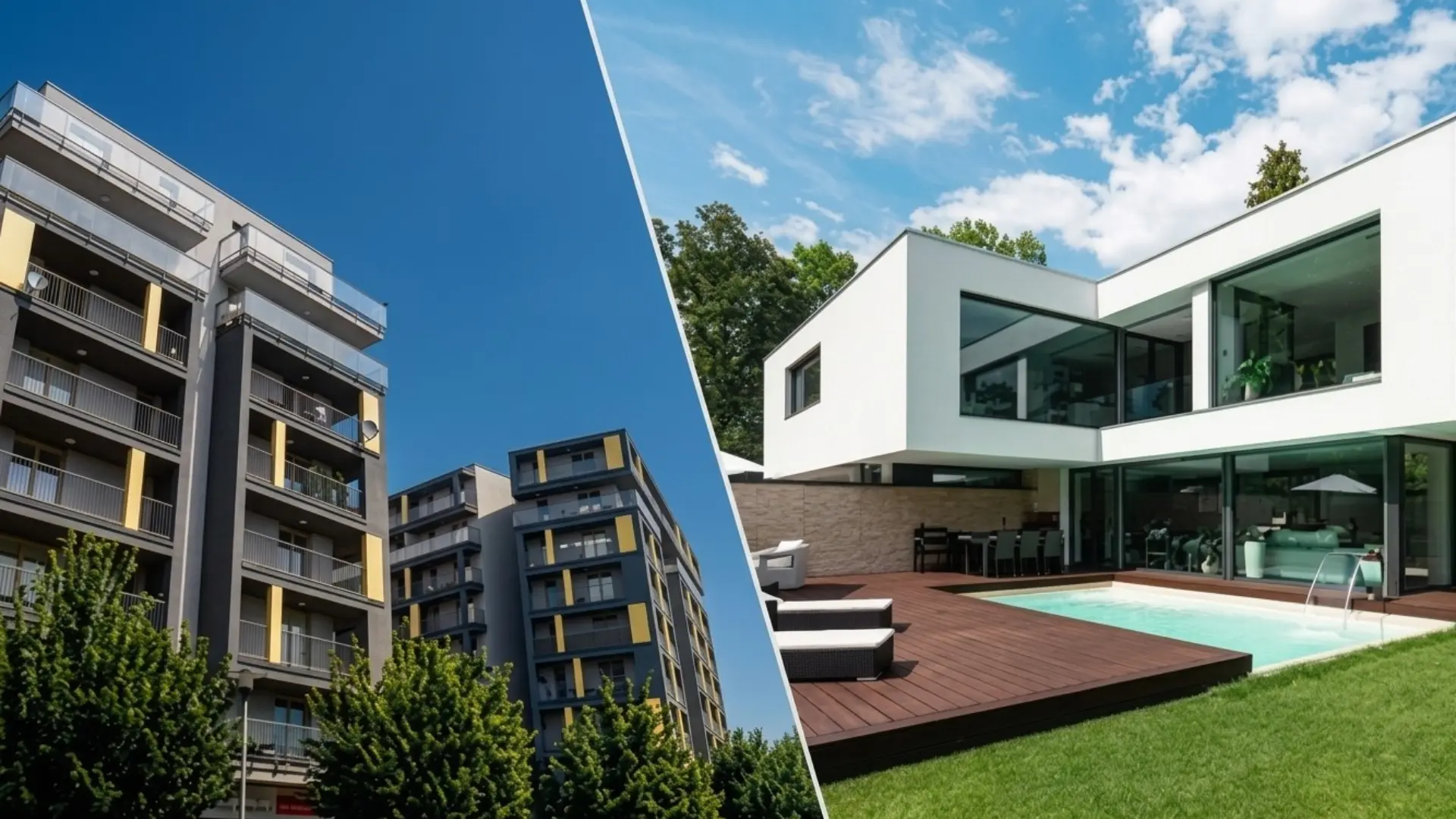
Pakistani cities have mostly grown outward, with houses on individual plots. But land near jobs is limited. Building upward is one way to fit more homes on less land.
Here is how the two compare:
Factor | Horizontal sprawl (houses on plots) | Vertical living (apartments) |
Land used per family | High | Low |
Distance from jobs | Usually far, on the city edge | Can be close to the city center |
Daily commute | Long and costly | Shorter |
Cost of roads, water, and sewer lines | High, spread over a wide area | Lower, shared by many families |
Effect on farmland | Eats into fields around cities | Saves farmland |
Price for the buyer | Higher upfront cost | Often a cheaper entry point |
Who Is Hit Hardest by the Urban Housing Shortage?
The housing crisis does not hurt everyone equally. Some groups feel it far more than others.
Here are the people who carry the heaviest load:
Low-income families: They make up 62% of all unmet housing demand. Most private projects are built for richer buyers. So these families end up in crowded rooms or katchi abadis.
Young first-time buyers: Young couples want their own home, but home loans are rare in Pakistan. Without loans, most young people must save for decades or rely on family.
Renters: Every rent increase cuts into savings. Many renters also have no written agreement. That means they can be asked to leave or pay more at short notice.
Informal and daily wage workers: Banks usually ask for salary slips and tax records. Workers paid in cash often cannot show these.
New migrants and climate-displaced families: People who arrive in a city with little money often settle wherever they can. That is usually on the city edge, far from jobs, schools, and hospitals.
People Also Search For: https://gharhub.com/house-construction-materials-list
Other Effects of Unplanned Urbanization
Housing is the biggest pain point, but it is not the only one. When cities grow without a plan, everyday life gets harder for everyone living in them.
Effect | What it looks like in daily life |
Infrastructure strain | Water, sanitation, schools, and hospitals come under growing pressure as more people share them |
Water shortages | Pakistan is fast becoming a water-scarce country, and city taps run dry first in crowded areas |
Traffic and pollution | Longer commutes, more cars on the road, and smoggy winters in cities like Lahore |
Loss of farmland | In Lahore, over 35% of agricultural land has been converted to built-up areas since 2000, according to Punjab's Urban Unit |
All these problems connect back to housing. Poorly planned homes far from jobs mean more traffic. More housing societies on farmland mean less local food. Fixing housing helps fix the rest.
What Is the Government Doing About the Housing Crisis?
The good news is that the government is not sitting still. In 2026, two big housing programs are active: one run by the federal government and one by the Punjab government. Here is a quick side-by-side look.
Mera Ghar Mera Ashiana (Federal Markup Subsidy Scheme)
The federal government announced Mera Ghar Mera Ashiana in September 2025. Its goal is to make home loans cheaper by subsidizing the markup that banks charge.
In February 2026, the Economic Coordination Committee approved major upgrades. The loan limit went up to Rs10 million, bigger house sizes were allowed, and a uniform 5% markup was introduced for borrowers. The buyer pays 10% upfront, and the bank finances 90%. Repayment can stretch up to 20 years. The scheme now runs under the federal Wazir-e-Azam Apna Ghar Program, "Ghar Ho Tu Apna".
Interest has been strong. By April 30, 2026, the scheme had received 25,304 applications. Of these, 8,990 were approved, and 1,845 families had received their money. The government has set a target of financing 500,000 homes in four years.
Apni Chhat Apna Ghar and Apni Zameen Apna Ghar (Punjab)
Punjab launched Apni Chhat Apna Ghar in 2024 with an initial aim of 100,000 houses for low-income families. Families who own a plot of up to 5 marla in a city, or up to 10 marla in a village, can get an interest-free loan of Rs 1.5 million to build their home.
For families with no land at all, the companion scheme Apni Zameen Apna Ghar offers free 3-marla plots along with construction loans.
The program has grown quickly:
More than 110,000 houses completed by June 2026.
Around 170,000 families financed by July 2026.
New interest-free loans of Rs 500,000 to Rs 1 million for repairing old, damaged houses.
An expansion for joint families who want to add space to their existing homes.
Possible Solutions to Pakistan's Urban Housing Crisis
Government schemes are a start, but no single program can close a 10 million home gap. The crisis needs action on many fronts at once. These seven solutions work best when they work together.
Promoting Vertical and Mixed-Use Development
Cities cannot keep spreading outward forever. Building apartments near jobs and transport lets more families live on less land. Mixed-use buildings go a step further. Shops sit on the ground floor, and homes sit above. People can then live, work, and shop in the same area, which cuts long commutes.
The key is to put these homes where the jobs are. Researchers have found that affordable housing close to mass transit and jobs has become badly imbalanced in Pakistan's big cities.
Making Housing Finance Accessible
Most homes in Pakistan are still bought with cash or family savings. Wider access to home loans could change that. Two steps matter most:
Stronger foreclosure laws: Banks hesitate to lend because recovering a defaulted loan takes years. A new foreclosure law is under review to speed this up, with notice periods to protect borrowers.
Flexible eligibility: Lenders can accept utility bills, mobile wallet records, or rent receipts as proof of steady payment. This would open loans to informal workers.
Public-Private Partnerships for Low-Cost Housing
The government owns land. Private developers know how to build. Together, they can deliver more homes, faster. Punjab already uses this idea. One of its housing models invites developers to build homes on state land through a land-sharing arrangement.
Developing Secondary Cities and Satellite Towns
Too many people are squeezing into a handful of megacities. Growing smaller cities with good jobs, colleges, and hospitals would spread the load. Better road and rail links between small, medium, and large cities would also help, as researchers recommend.
Regularizing Informal Settlements and Land Titles
Millions already live in katchi abadis. Bulldozing them only moves the problem. A smarter path is to give residents secure land titles and upgrade basic services. Once families legally own their homes, they invest in improving them. They can also use their property to get a loan.
Enforcing Master Plans and Smart Urban Planning
Pakistan has master plans, but they are often ignored. In Lahore district alone, around 380 private housing societies operate, and 156 have been set up illegally, according to the Lahore Development Authority. Enforcing zoning rules would protect farmland, stop fraud, and guide growth to the right places.
Managing Population Growth Through Policy
Even the best housing plan will fall behind if the population keeps growing at 2.55% a year. Prime Minister Shehbaz Sharif has said population growth is outpacing economic growth. Better access to family planning, girls' education, and maternal health services can slow growth over time. This gives housing supply a fair chance to catch up.
Practical Tips for Homebuyers and Renters in Pakistan's Growing Cities
Big policy changes take years. But you can make smarter housing choices today. Here are practical tips to protect your money and find the right home in a crowded market.
Keep your monthly installment or rent below one-third of your total family income.
Then find out whether you are eligible for any government assistance.
Search for a developing area that lies in the vicinity of the routes.
Choose apartments to get into the property market.
Make sure that the builder has a good reputation, the construction has been approved, and inquire if a management system is in place.
Check whether the society is approved by the relevant authority, i.e., LDA for Lahore, RDA for Rawalpindi, CDA for Islamabad, and SBCA for building schemes in Karachi.
Get the list of approved and unauthorized schemes from the relevant authority.
Demand the layout plan and NOC, and match the number of your plot to it.
Ensure title deeds from the land records office or society office.
Never make payment in full in cash without any receipt and transfer paper.
Rent vs. Purchase Analysis
In case of rental accommodation, make sure that you sign a written contract with a yearly increase rate.
Don’t forget to register as a tenant at the local police station if required by your province.
Always use actual material rates to estimate your construction costs
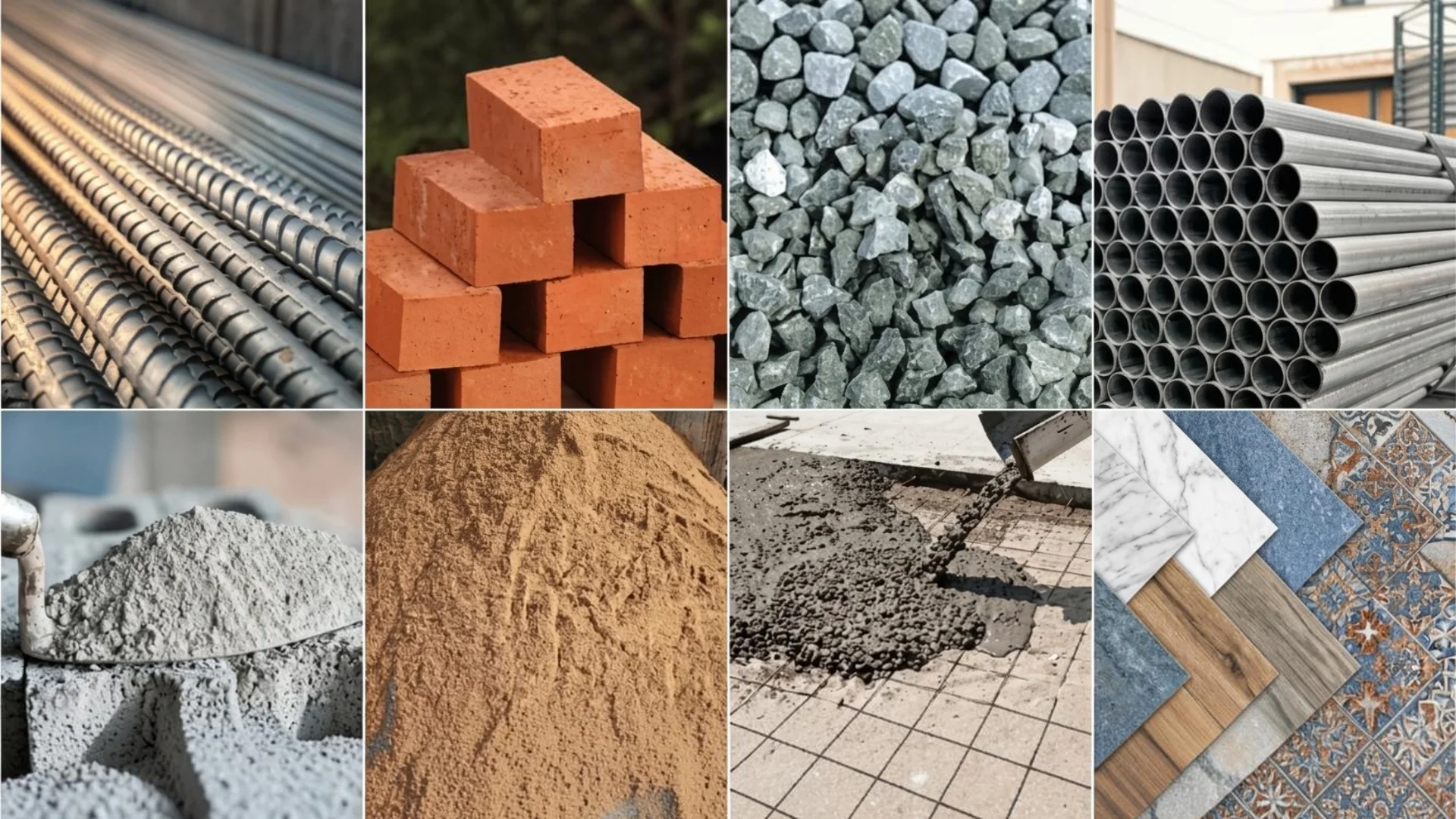
On Gharhub, you can check current rates for cement, bricks, steel, sand, and crush in one place, compare suppliers, and get materials delivered to your site. A clear material budget keeps your build on track and your loan under control.
Conclusion
Urbanization in Pakistan continues to persist unabated. As the population continues to grow by millions every few years, their destination is cities. Housing has simply failed to keep up. This is why rent levels rise, prices increase, and katchi abadis continue spreading everywhere.
Yet this is not how the story has to end. Federal and Punjab housing schemes have already done wonders for countless families. Improved planning, easier access to housing loans, apartments located near places of work, and stricter regulations against illegal societies will bridge the gap over time.
And remember, there is an important part that you need to play too. You should understand your budget. Find out what schemes you qualify for. Go for growing neighborhoods with good public transport. Always verify before buying.
FAQs
What is meant by urbanization in Pakistan?
Urbanization in Pakistan refers to the continuous movement of population from rural to urban areas due to an increase in the population, migration for job purposes, climate change, and expansion of urban areas into rural areas.
What percentage of the population in Pakistan lives in urban areas?
According to the 2023 census, 38.88% of the population of Pakistan lives in urban areas, which is roughly 93.88 million individuals. The most urbanized area is Sindh, with 53.73%, while Punjab has 40.70%.
How does the increase in the population affect housing in Pakistan?
An increase in the population results in an increase in the number of families that require accommodation every year. Due to the inadequate construction of houses, demand outpaces supply, leading to an increase in land prices, real estate prices, and rentals.
How large is the housing gap in Pakistan?
According to estimates, the housing gap in Pakistan is above 10 million units. The need for houses in urban areas is about 350,000 every year, but there are not even 150,000 new units constructed.
What are the primary reasons behind urbanization in Pakistan?
The primary reasons behind urbanization in Pakistan are:
High natural growth rate in urban areas
Migration from rural to urban areas for work opportunities, better education, and health facilities
Natural calamities such as floods in 2022
Expansion of urban areas into nearby villages
Reduction in income generation from agriculture
What are the housing schemes being implemented by the government of Pakistan in 2026?
The housing schemes being implemented in 2026 are the Federal Housing Scheme Mera Ghar Mera Ashiana that has been subsumed under the Wazir-e-Azam Apna Ghar program and Punjab's housing schemes Apni Chhat Apna Ghar and Apni Zameen Apna Ghar.
Who qualifies for the Mera Ghar Mera Ashiana Program?
The applicants should be Pakistani nationals possessing a valid CNIC and must be first-time homeowners. Non-resident Pakistanis living in certain foreign nations like the UAE, Saudi Arabia, and Malaysia will also qualify.
Which option is preferable, renting or buying, in Pakistan’s urban centers at present?
Purchase is a better option for those who can provide an initial down payment, have an established career, and intend to live for seven years or more. Renting is a choice for those who are planning to move soon or have limited savings.