 Contact Us
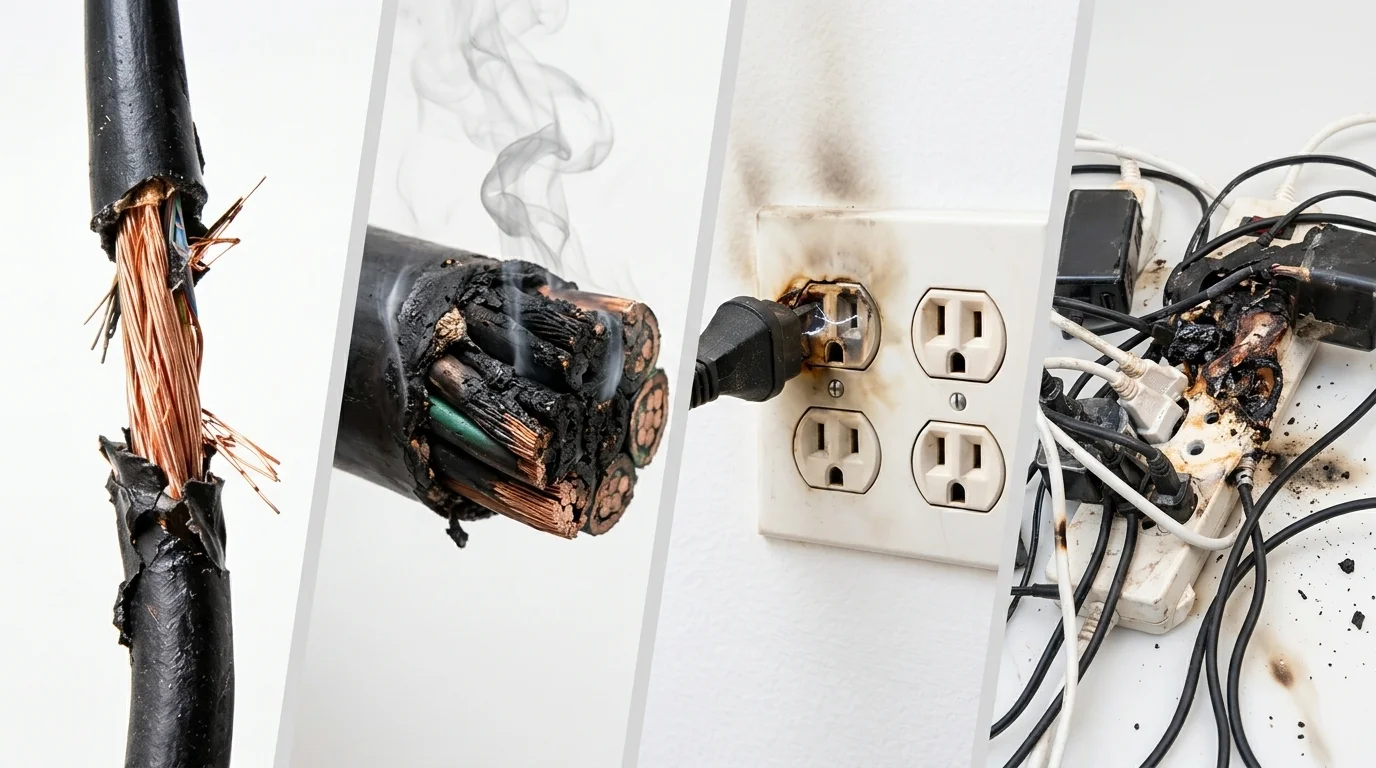
Have you ever plugged in a charger and seen a tiny blue spark? It is usually shrugged off by most people. But sometimes the smallest of sparks means something important.
Electric sockets are present everywhere at home. They sit discreetly hidden behind your sofa, beside your bed, and above your kitchen counter. Since we use them every day, we don't notice their presence anymore. That's precisely why electrical socket faults aren't detected immediately.
Electrical malfunctions lead to over 46,700 house fires in a single year. In total, they kill 390 people, injure 1,330 people yearly, and cause around $1.5 billion worth of property damage annually. There are approximately 2,400 kids injured every year due to sticking foreign objects in wall sockets.
Faulty electric sockets almost always leave clues before any fire or electric shock occurs. This guide is for homeowners, renters, and concerned parents. You needn't have electrical training. After learning the signs, you will prevent most issues from turning into a fire or shock.
Related:https://gharhub.com/electrical-sockets-in-pakistan
What Is an Electric Socket and How Does It Work?
An electrical socket is a hole in the wall where your devices connect with your home’s electricity. This can also be called an outlet, plug point, or even a receptacle – all three refer to the same item.
The socket is not just a hole in the wall. It is where your electrical wires meet up with each of your devices, and when there is a shock, heat and sparks are created within that wall cavity.
Key Components of a Socket (Live, Neutral, and Earth Terminals)
Generally, there are three terminals within each socket. They perform different functions.
Live terminal: It transmits power from the circuit to your appliance. It has the full potential of electricity because it is highly dangerous.
Neutral terminal: It offers an alternative route for the power to travel back to the board in order to enable your appliance to work properly.
Earth terminal: This one acts as your last resort in case of any mishap. If a fault happens, the earth wire sends stray current safely into the ground instead of through your body.
The screws that hold these wires must stay tight. A loose screw on any terminal is one of the most common reasons sockets spark, heat up, or stop working.
Common Types of Electric Sockets
Different sockets come in different purposes. There are some that are standard and can be used anytime. However, others are special and provide safety for places like kitchens, bathrooms, or homes with kids.
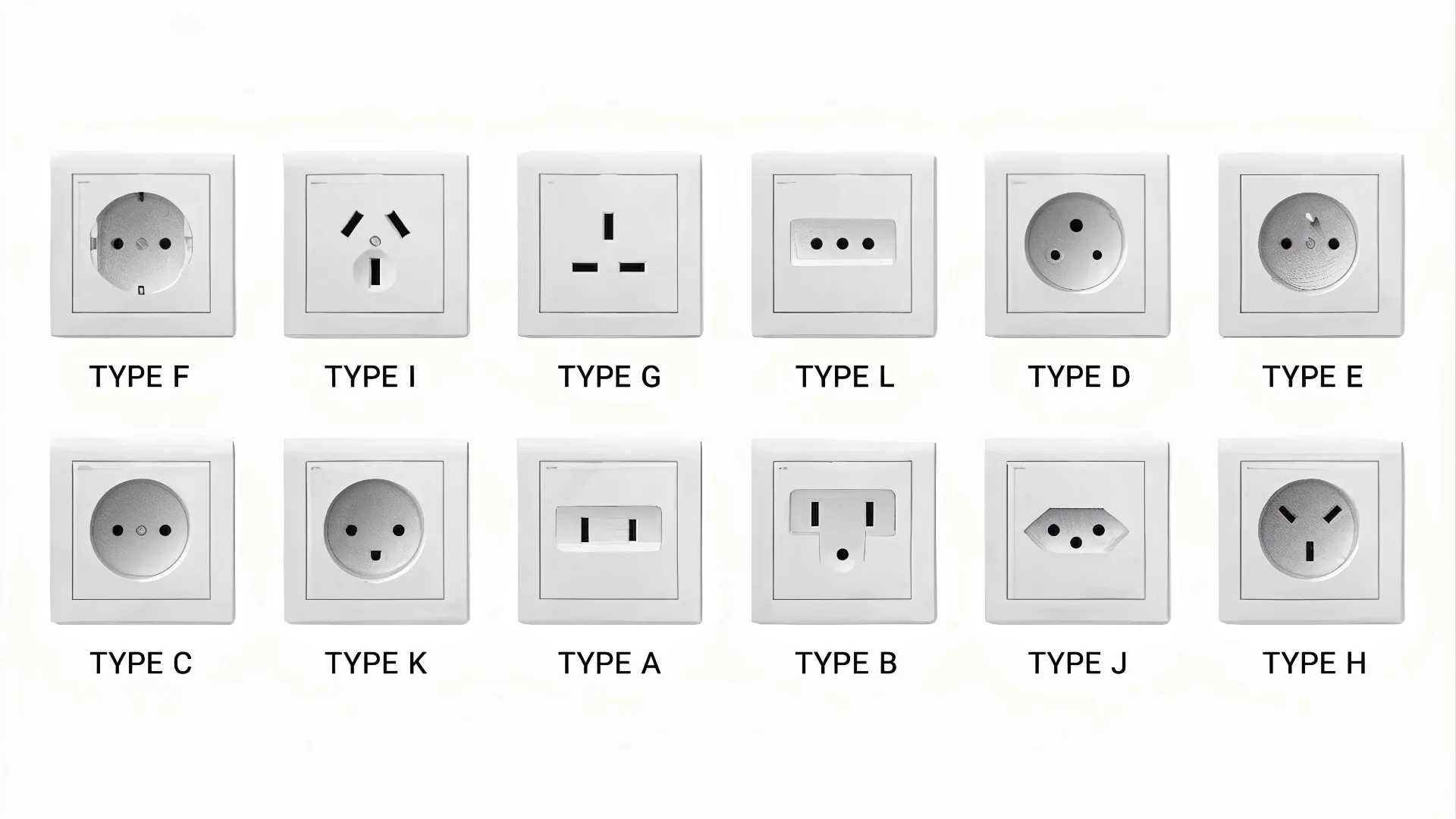
Socket Type | Purpose | Where Used |
Standard 3-pin socket | Powers everyday devices | Bedrooms, living rooms, offices |
Universal socket | Accepts many plug shapes | Homes with mixed plug types |
Heavy-duty power socket | Runs high-wattage appliances | Kitchens, AC points, water heater points |
Shuttered or tamper-resistant socket | Blocks objects from entering slots | Homes with kids, schools, daycares |
RCD or GFCI socket | Stops shock near water | Kitchens, bathrooms, laundry, outdoors |
AFCI protected socket | Detects dangerous arcing | Bedrooms, living areas |
USB socket | Charges phones without adapters | Bedsides, desks, kitchens |
Smart socket | Lets you control power from your phone | Anywhere in the home |
Weatherproof socket | Gives power outdoors | Gardens, balconies, garages |
Warning Signs of a Faulty Electric Socket
The most common warning signs of a faulty electric socket are sparks, burn marks, heat, loose plugs, strange sounds, burning smells, no power, and a breaker that keeps tripping. Your socket is trying to tell you something.
Here is how to read the clues:
Sparks When Plugging In or Unplugging
A tiny, quick flash when you plug in a device can be normal. It happens because current rushes in all at once. But some sparks are not normal at all. Such as big sparks or sparks that last more than a blink and may be yellow, orange, or white sparks instead of a small blue flash
Burn Marks, Discoloration, or Melted Plastic
Black or brown marks around the socket holes mean heat has already done damage. The same goes for plastic that looks warped, bubbled, or melted. This often means wires inside are arcing.
Socket or Faceplate Feels Warm or Hot
A socket should feel cool or room temperature. A slightly warm plug on a heavy appliance can be okay. But a hot faceplate is a red flag. It usually points to a loose wire, an overloaded circuit, or worn contacts.
Loose Plugs That Keep Falling Out
Inside every socket are metal clips that grip the plug pins. Over time, these clips wear out. A loose grip means a poor connection. Poor connections create heat and tiny sparks you cannot see.
Buzzing, Crackling, or Humming Sounds
Sockets should be silent. Any sound means electricity is jumping across a gap it should not cross. This is called arcing. Arcing is one of the top causes of electrical fires, so treat any noise as urgent.
Dead Socket With No Power
A socket that suddenly stops working is not always dangerous. But it always has a reason. Common causes include a tripped circuit breaker or a loose or burnt wire behind the socket.
Breaker Trips Every Time the Socket Is Used
A breaker trips to protect you. If it trips each time you use one socket, there is a fault. It could be an overload, a short circuit, or current leaking to earth. That breaker is doing its job by warning you.
What Causes Electric Socket Problems?
Every warning sign above has a cause behind it. Most electric socket problems come from loose wiring, overloading, old age, moisture, poor quality parts, damaged plugs, power surges, or pests. Let's go through each one.
Loose or Damaged Wiring Connections
This is the number one cause. Every time you plug in or pull out a plug, the socket moves a tiny bit. Over the years, the screws holding the wires can loosen. A loose wire does not touch the terminal firmly. Electricity then jumps across the small gap and creates heat.
According to the NFPA, wiring and related equipment, which includes sockets and switches, was involved in 69% of home fires linked to electrical distribution or lighting equipment.
Overloading With Too Many Appliances
Each socket and circuit can only carry so much power. Plugging in too many things at once makes the wires work too hard. They heat up, and that heat damages the socket over time.
Moisture and Water Exposure
Water and electricity are a dangerous mix. Steam from a kettle, splashes near a sink, or damp walls in rainy weather can all reach a socket. Water can cause rust inside, short circuits, and electric shocks. Sockets in kitchens, bathrooms, and outdoor areas need extra protection.
Poor-Quality Products or Faulty Installation
Cheap sockets may look fine on day one. But thin metal and weak plastic fail much faster. Fake or uncertified products are a real risk too.
Signs of a poor-quality socket or a bad install include:
Plugs that feel loose from the very first use
A faceplate that cracks or bends easily
No brand name or safety certification mark
Wires that were not tightened or were connected to the wrong terminal
A socket fitted by someone who is not a trained electrician
People also Search For: https://gharhub.com/best-led-lights-prices-pakistan.
Damaged Plugs and Appliances
Sometimes the socket is fine, and the problem is the plug. Bent pins, cracked plug bodies, and frayed cords can all cause sparking. They also damage the socket clips each time you push them in.
Power Surges and Voltage Fluctuations
A power surge is a sudden jump in voltage. It can come from lightning, grid problems, or big appliances switching on and off. Frequent load shedding and power coming back on can also cause spikes. Repeated surges weaken socket parts and can fry the devices plugged in.
Pest and Rodent Damage to Wiring
Rats and mice love to chew. Wire coating is soft and easy for them to bite through. Once the coating is gone, bare wires can touch and cause sparks or short circuits inside the wall.
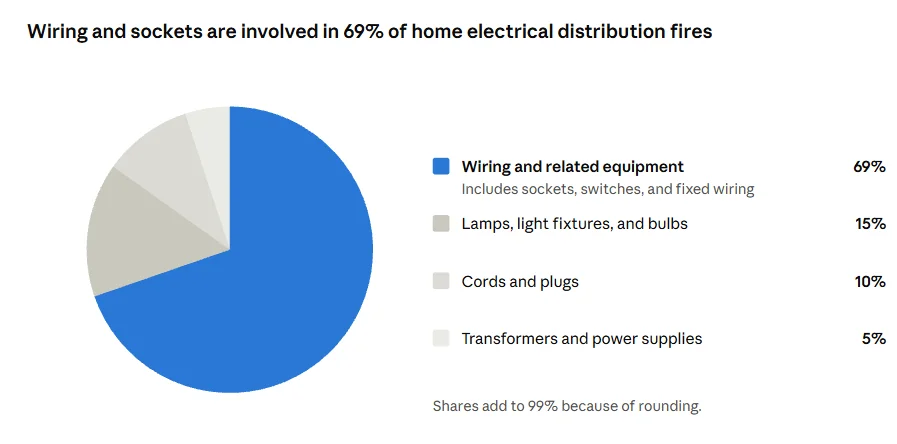
Wiring and related equipment, where your sockets live, start more of these fires than every other group combined. That is why loose terminals and worn sockets deserve your attention first.
Risks and Dangers of Faulty Sockets
The main risks of a faulty electric socket are electric shock, electrical fires, damaged appliances, injuries to children and pets, and costly property damage.
Some of these happen slowly. Others happen in a second.
Electric Shock and Electrocution
A shock happens when electricity passes through your body. A cracked faceplate, exposed wires, or a missing earth connection can all make this possible. Wet hands make it even worse. A mild shock can burn your skin. A strong one can stop your heart.
Electrical Fires
This is the biggest danger. A faulty socket can heat up for weeks before anything catches fire. Because the wires sit inside your walls, the fire can grow before you even smell smoke.
Damage to Appliances and Electronics
A bad socket does not deliver steady power. It flickers, sparks, and sends uneven current. Over time, this can burn out phone chargers and laptop adapters and damage the motors in fridges, washing machines, and ACs. It can also wipe out TV and computer circuit boards and shorten the life of almost every device you plug in.
Hidden Dangers for Children and Pets
Kids are curious. Sockets sit right at their eye level. Pets may chew cords or lick wet plugs. ESFI data shows an average of 2,850 children are hurt by sockets each year.
Safety Precautions to Prevent Socket Problems
These risks are real, but most of them are easy to prevent. The best ways to prevent electric socket problems are to avoid overloading, buy certified sockets, add safety devices, childproof outlets, keep water away, unplug gently, use extension boards wisely, and get regular inspections.
Avoid Overloading
Every socket has a rating printed on it, usually in amps. You can work out how much power it can safely handle with one simple sum.
Watts = Volts x Amps
Use Certified, Good-Quality Sockets and Plugs
A good socket costs a little more, but it lasts for years. When you shop, check for:
A recognized safety mark from a testing body or your national standards authority
A clear amp rating printed on the front or back
Strong, thick metal contacts
Fire-resistant plastic that does not bend easily
A trusted brand with a warranty
Related: https://gharhub.com/shop/electric-conduit-pipes
Install Protective Devices (RCD/GFCI, AFCI, Surge Protectors)
These devices act like bodyguards for your sockets. Each one protects against a different danger.
Device | Protects Against | Best For |
RCD or GFCI | Electric shock from leaking current | Kitchens, bathrooms, laundry, outdoors |
AFCI | Fires caused by arcing wires | Bedrooms and living areas |
Surge protector | Damage from sudden voltage spikes | TVs, computers, routers, smart devices |
Childproof With Tamper-Resistant Sockets and Covers
Tamper-resistant sockets have tiny spring shutters behind the slots. The shutters only open when both pins of a real plug push in at the same time. A hairpin or key cannot get through.
Plastic plug covers help, but they are not enough. Caps can also be a choking hazard. Shuttered sockets are a permanent fix.
Keep Sockets Away From Water and Damp Areas
Keep sockets at least an arm's length from sinks, taps, and showers where possible. Never touch a socket or plug with wet hands. Wipe up spills near sockets right away. In bathrooms, kitchens, and outdoor spaces, always use RCD or GFCI protection and weatherproof covers.
Use Extension Boards Responsibly
Extension boards are handy, but they are meant for short-term use. Keep them safe with these habits:
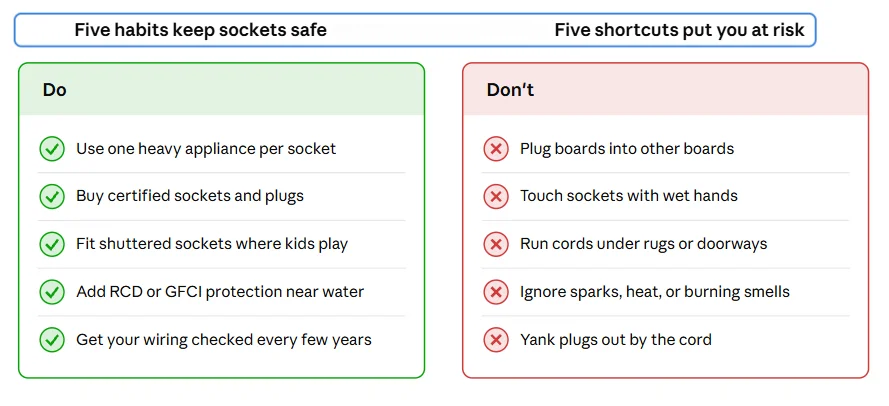
Never plug one extension board into another.
Do not run cords under rugs or across doorways.
Pick boards with a built-in fuse, breaker, or surge protection.
Unroll cable reels fully before use so they do not overheat
Schedule Regular Electrical Inspections
A licensed electrician can spot loose terminals, worn sockets, and overloaded circuits before they cause trouble. Book an inspection when you move into an older home, after renovations, after floods or storms, and every few years after that. Book one sooner if you notice any warning signs from this guide.
What to Do in a Socket Emergency
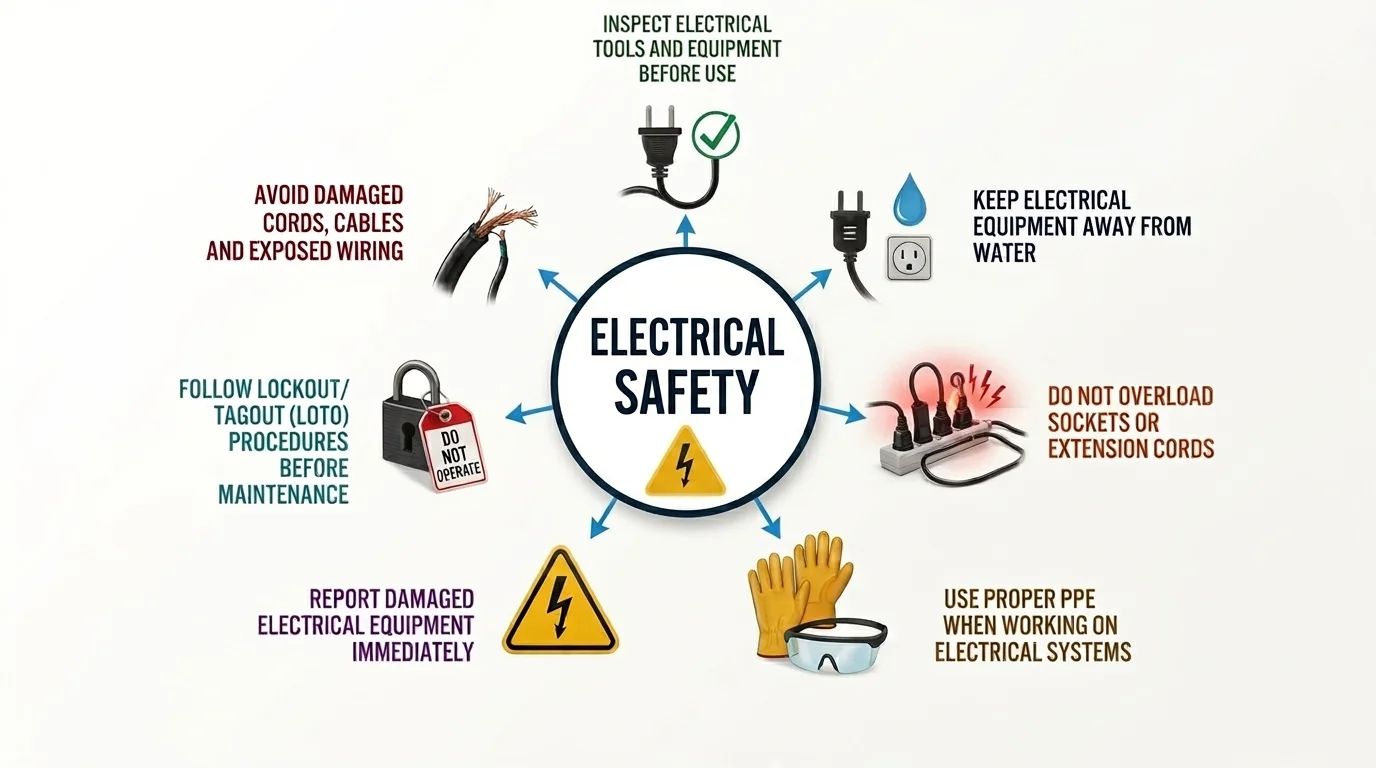
Even with the best precautions, emergencies can still happen. Knowing what to do in the first minute can save a life. Stay calm, cut the power, and get help.
If a Socket Sparks or Smokes
Do not touch the socket and the plug.
Go to your panel board and turn off the breaker corresponding to that particular circuit. If you do not know the particular circuit, turn off the main breaker.
Move children and pets away from the area.
Open the window if there is any smell of burning and smoke.
Do not reuse the socket before an electrician checks it.
If Someone Gets an Electric Shock
Your first instinct may be to grab the person. Don't. If they are still touching the power source, the current can pass into you too.
Turn off the power supply at the main board immediately.
If you do not have access to the board, push the person away from the source by using a non-conductive object such as a wooden broomstick.
Ring up your local emergency contact number.
See if they are breathing and perform CPR only if you know how to do it and the person is not breathing.
Medical assistance is necessary regardless of whether the person seems alright.
If an Electrical Fire Breaks Out
Do not use water to put out an electrical fire because water conducts electricity and will electrocute you. Water may also spread the fire.
In case of a minor fire, turn off the power source before using the fire extinguisher if it is possible to reach the board.
Use the right fire extinguisher that is designed for putting out electrical fires, which includes carbon dioxide or dry powder fire extinguishers.
In case there is no fire extinguisher, use a fire blanket if the fire is minor.
In case the fire is larger than a dustbin or spreading, evacuate everyone and close the door behind you. Call the fire brigade from outside.
Conclusion
Electric sockets may be tiny, but their function is important. In case of failure, they usually give you advance notice. This can happen in the form of sparks, burn marks, heat emission, wobbly plugs, buzzing sounds, and weird odors.
The worst danger that comes from malfunctioning sockets includes electric shock, house fire, and injuries to inquisitive kids. The majority of these incidents are caused by minor issues such as improperly installed or outdated sockets.
Keep these rules in mind:
Always avoid overloading electric sockets. A good rule is one heat-producing appliance per socket.
Replace your sockets with certified shuttered sockets protected by an RCD or GFCI where needed.
Contact a licensed electrician immediately in case of any warning signs.
Frequently Asked Questions (FAQs)
What causes the sparking in my socket upon plugging an appliance in?
A brief, small, blue spark can occur sometimes and is considered a normal event. This is due to the rapid flow of current that is provided when you connect the plug. Large or prolonged sparks are considered unusual and signify loose wiring, worn-out contacts, or an overloaded circuit.
Is it a danger if the socket seems to be warm?
Slightly warm plugs on appliances may be normal. Warm sockets or sockets with warm faces can pose danger, and usually signify loose wiring, worn contacts, or an overload.
Can a socket cause a fire even if there is no appliance connected to it?
Yes. Sockets provide current to other sockets within the circuit. When a wire behind the socket is loose, it poses a risk of heating and arcing.
How often should sockets be changed?
Sockets in places where a lot of action happens, such as the kitchen,s get old quicker. Change any socket if it doesn't grip the plug firmly or if it has any burn marks, cracks, or is hot. Sockets that do not have an earth pin or shutters are also recommended for change.
Is it okay to use extension boards long-term?
No. Extension boards are designed for temporary usage. Using an extension board on a daily basis, connecting a board to a board, and using large appliances through extension boards leads to overheating.
What is the difference between RCD/GFCI sockets and ordinary sockets?
An ordinary socket supplies power to electrical devices only. On the other hand, the RCD or GFCI socket monitors the flow of electricity. It will instantly cut the power in case of leakage from the socket.
Why do plugs keep falling out of the socket?
The metal clips within the socket have gotten worn out and cannot hold anymore. This can also happen when using poor-quality sockets or plugs with bent pins. When you have a loose plug, it causes sparking, so replace your socket soon.